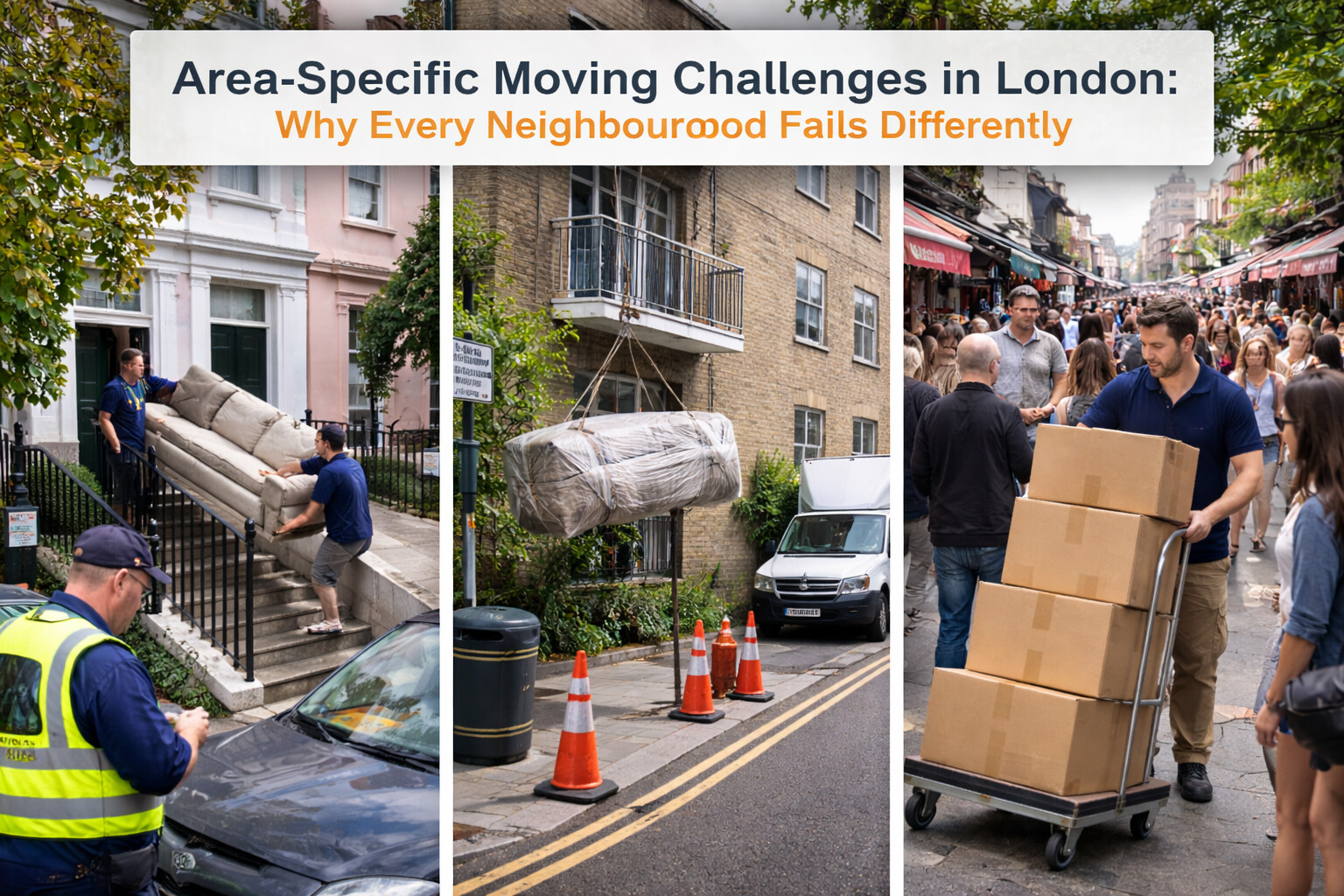



Moving within London is not just about distance or volume. In many cases, the borough you move in or out of has a bigger impact on cost, timing, and difficulty than the number of items you are moving. Each London borough operates with its own access rules, parking policies, street layouts, housing density, and enforcement style — all of which directly affect how a move works in real life.
This guide explains how London boroughs differ from a moving perspective, what challenges are most common, and how to plan correctly based on area — not assumptions.
You can also explore the full Areas & Location Guides pillar page here:
https://blog.xvan.uk/areas-location-guides/
Why London Boroughs Matter When Moving
London is made up of 32 boroughs plus the City of London, and they do not behave the same way when it comes to moving logistics.
Key differences between boroughs include:
- Parking suspension and permit systems
- Street width and access limitations
- High-rise vs low-rise housing stock
- Traffic density and enforcement levels
- ULEZ and controlled zones
- Time restrictions for loading and unloading
Ignoring borough-specific rules is one of the main reasons for fines, delays, extra charges, and failed moves.
Common Borough-Specific Moving Challenges
1. Parking and Suspension Rules
Some boroughs require advance parking suspension for moving vans, while others allow short-term loading. Approval times can range from 2 days to over 10 days, depending on the council.
2. Street Layout and Access
- Inner boroughs often have narrow streets, one-way systems, and limited stopping space
- Outer boroughs usually offer wider residential roads and easier access
3. Housing Type
- High-rise blocks and apartment complexes are common in certain boroughs
- Victorian terraces and converted flats dominate others
Each housing type changes loading time, labour needs, and vehicle size requirements.
Inner vs Outer Boroughs: Practical Differences
| Factor | Inner Boroughs | Outer Boroughs |
|---|---|---|
| Parking | Restricted | More flexible |
| Traffic | Heavy | Moderate |
| Street Width | Narrow | Wider |
| Enforcement | Strict | Less aggressive |
| Typical Move Time | Longer | Shorter |
Moves in inner boroughs often require more planning than manpower, while outer borough moves are usually more straightforward.
Borough Density and Its Impact on Cost
According to London housing and transport data:
- High-density boroughs increase average move time by 20–40%
- Parking fines for moving vans range from £65 to £130 per incident
- Failed first-attempt moves are significantly higher in dense areas
This is why area awareness matters more than choosing the cheapest quote.
How to Plan a Borough-Aware Move
To avoid common problems:
- Identify the exact borough, not just the postcode
- Check council parking rules early
- Assess access realistically (stairs, lifts, distance)
- Choose a van size suitable for street conditions
- Book with flexibility in timing
This is especially important for boroughs with controlled parking zones or heavy enforcement.
Borough-Based Moving Scenarios
Some boroughs are known for:
- Heavy student turnover
- Short-term rental churn
- High-rise developments
- Restricted heritage zones
Each scenario affects:
- Loading speed
- Required labour
- Equipment needs
- Insurance considerations
A “standard house move” assumption rarely works in London.
Using Xvan for Borough-Based Moves
The Xvan app is designed to handle location-specific moving requirements, not generic assumptions.
With Xvan, you can:
- Book man and van services matched to your borough conditions
- Choose flexible loading and access options
- Avoid overpaying for unnecessary services
- Plan realistically based on your area
Download Xvan (UK):
https://xvan.uk
Xvan adapts to where your move happens, not just what you move.
Frequently Asked Questions (FAQ)
Does the London borough affect moving cost?
Yes. Borough rules, parking enforcement, access difficulty, and traffic levels all influence total time and cost.
Do I always need a parking suspension?
Not always, but many boroughs strongly recommend or require it for smooth moves, especially in busy areas.
Are outer borough moves always cheaper?
Generally yes, but factors like volume, distance, and building type still matter.
Can I move without knowing borough rules?
You can, but it significantly increases the risk of delays, fines, or failed loading.
Summary
Moving in London is borough-dependent. Two moves that look identical can turn into completely different experiences simply because they happen in different areas. Understanding borough rules, access realities, and local challenges is the difference between a smooth move and a stressful one.
This guide helps you plan based on location reality, not assumptions.
For more area-specific insights, visit the full pillar page:
https://blog.xvan.uk/areas-location-guides/