

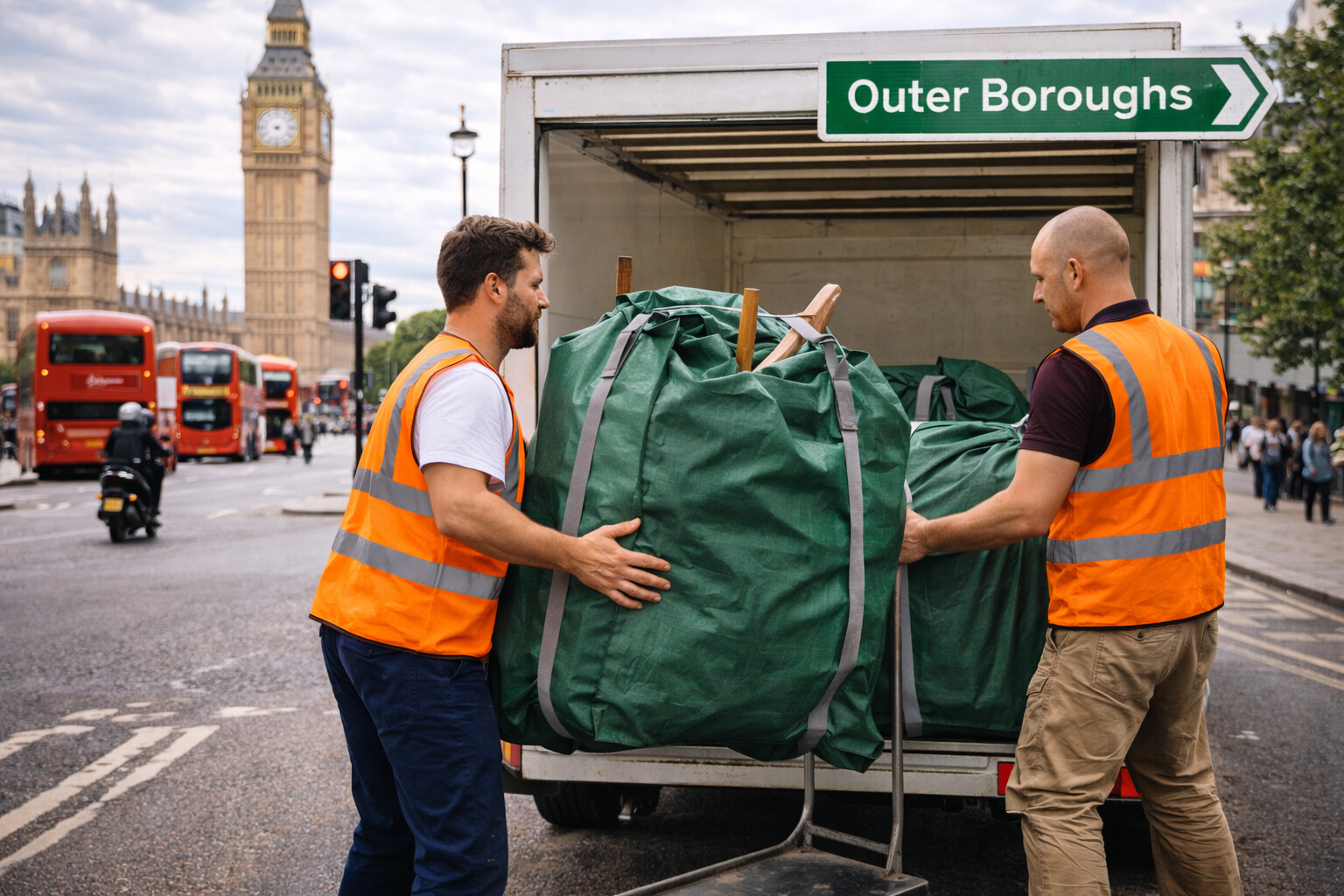
Moves from Central London to outer London boroughs are among the most common relocations in the capital — and also among the most misplanned. People focus on the destination (more space, easier parking) and underestimate the origin, where most failures actually occur.
This guide explains how Central-to-Outer London moves really behave, why early-stage mistakes cascade through the day, and how to plan around the most restrictive part of the route, not the easiest.
For the full collection of location-based guides, visit the pillar page:
https://blog.xvan.uk/areas-location-guides/
Why Central → Outer Moves Feel “Easy” (and Aren’t)
The usual assumption is:
- Loading is “just one flat”
- Unloading will be simple
- Distance is the main challenge
In reality:
- Central London access dictates the entire schedule
- Early delays cannot be recovered
- Enforcement pressure peaks at the origin
- Stress and fatigue begin immediately
If the Central London phase fails, the rest of the move is irrelevant.
The Central London Origin Problem
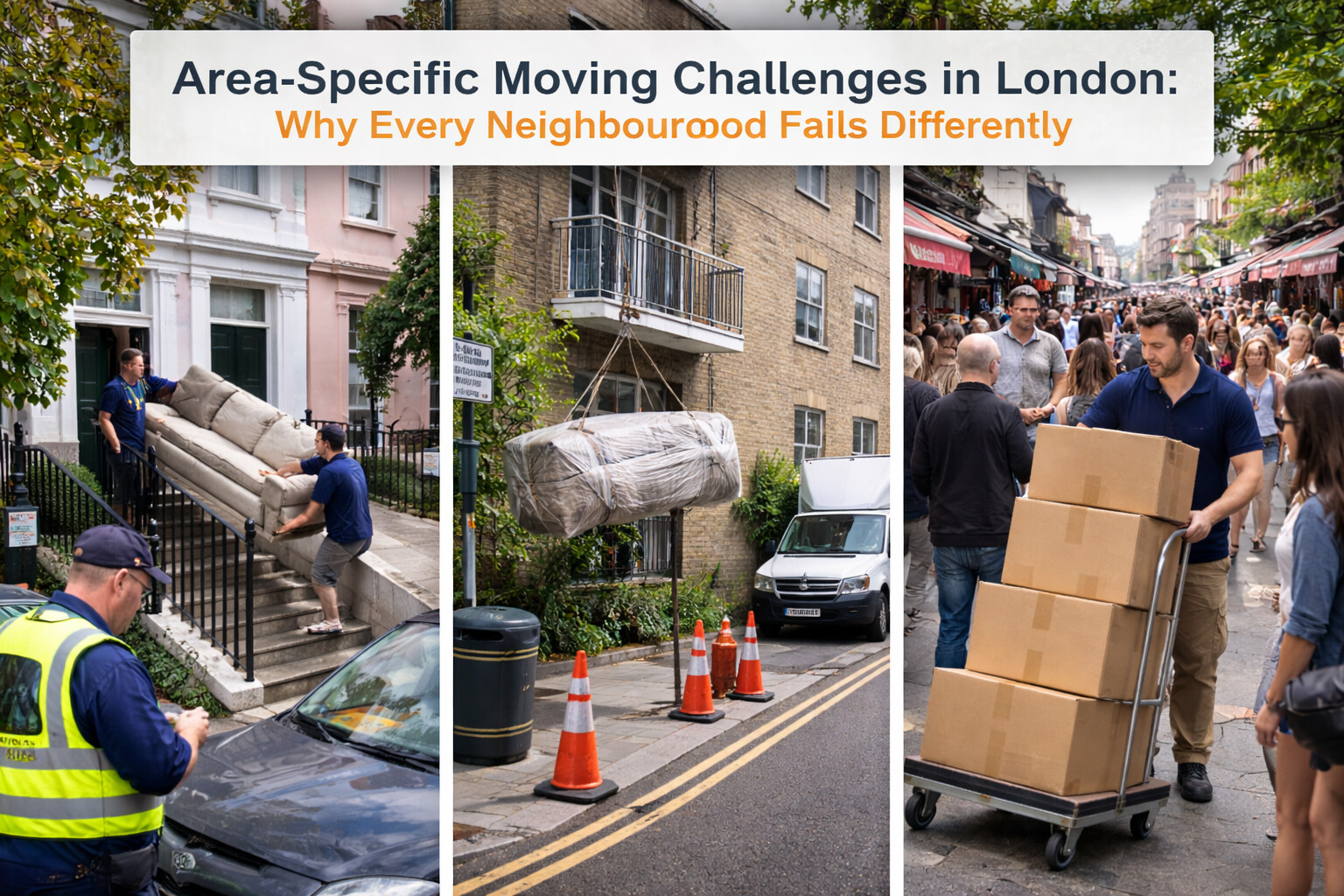
Central London origins typically involve:
- Controlled Parking Zones
- Red routes nearby
- Time-restricted loading
- High pedestrian traffic
- Active enforcement
Common failure points:
- No legal stopping space
- Missed loading windows
- Immediate fines
- Forced van relocation mid-load
A delay of 20 minutes at the start can turn into hours lost later.
Carry Distance and Vertical Load
Central London properties often mean:
- Flats above shops
- Converted buildings
- Narrow staircases
- Lift dependency
This creates:
- High time per item
- Slow loading pace
- Rapid fatigue early in the day
Fatigue accumulated at the origin reduces efficiency for the rest of the move.
Enforcement Timing: Why Morning Matters
Many Central London streets:
- Allow loading only outside peak hours
- Enforce aggressively during the morning
Starting too late can mean:
- Losing legal loading windows
- Being pushed into peak enforcement
- Triggering fines or forced relocation
Central-to-Outer moves should usually start earlier than feels comfortable — if legally permitted.
Route Transition: Where the Pace Changes
Once the van leaves Central London:
- Traffic often eases
- Enforcement pressure drops
- Pace improves
This creates a false sense of recovery. In reality:
- Lost time is rarely regained
- Fatigue slows unloading
- Daylight and energy are already reduced
Planning must assume no recovery of lost time.
Destination Reality: Outer Boroughs Aren’t Effortless
Outer borough destinations introduce:
- Larger properties
- More furniture
- Multiple floors
- Longer unloading phases
After a hard Central London start:
- Physical demand increases
- Concentration drops
- Mistakes become more likely
Outer borough unloading is easier legally — but harder physically.
Cost Patterns in Central → Outer Moves
| Cost Driver | Impact |
|---|---|
| Access at origin | Critical |
| Early delays | Cascading |
| Labour fatigue | High |
| Distance | Moderate |
| Overruns | Common |
Most overruns are caused by origin mismanagement, not distance.
Common Mistakes People Make
- Planning around the destination
- Ignoring Central London enforcement windows
- Underestimating carry distance at origin
- Booking tight start times
- Assuming time can be “made up later”
Central London does not allow recovery.
Timing Strategy That Actually Works
A realistic Central → Outer plan includes:
- Earliest legal loading window at origin
- Conservative time estimates for loading
- Buffer time built in early, not late
- Avoiding peak traffic exits from Central London
- Accepting that unloading will happen later in the day
Front-loading caution prevents end-of-day chaos.
Central → Outer vs Outer → Central
| Factor | Central → Outer | Outer → Central |
|---|---|---|
| Primary risk | Origin access | Destination access |
| Recovery potential | Low | Very low |
| Enforcement | Early | Late |
| Fatigue pattern | Early | Late |
Both are hard — but for different reasons.
How to Plan Around the Hardest Point
Always ask:
- Which location has stricter rules?
- Where is enforcement most aggressive?
- Where is access least forgiving?
That location sets:
- Start time
- Service type
- Buffer time
- Van choice
In Central → Outer moves, the answer is almost always the origin.
Using Xvan for Central to Outer Moves
The Xvan app is designed to handle origin-heavy complexity, which is critical for Central → Outer London moves.
With Xvan, you can:
- Match services to Central London constraints
- Choose flexible loading options
- Avoid rigid time slots
- Plan realistically around enforcement windows
Download Xvan (UK):
https://xvan.uk
Xvan plans around where the move is hardest, not where it looks easiest.
Frequently Asked Questions
Are Central → Outer moves cheaper?
They can be, but only if the origin is planned correctly.
Should I start early?
Yes, if legally allowed. Early starts reduce enforcement risk.
Can lost time be recovered later?
Rarely. Central delays cascade.
Is unloading always easy in outer boroughs?
Easier legally, harder physically.
Final Summary
Central London to Outer Borough moves fail most often at the very beginning. Enforcement pressure, access difficulty, and vertical loading at the origin set the tone for the entire day.
If you plan around the hardest part first — Central London — the rest of the move becomes manageable. If you don’t, even the easiest destination won’t save you.