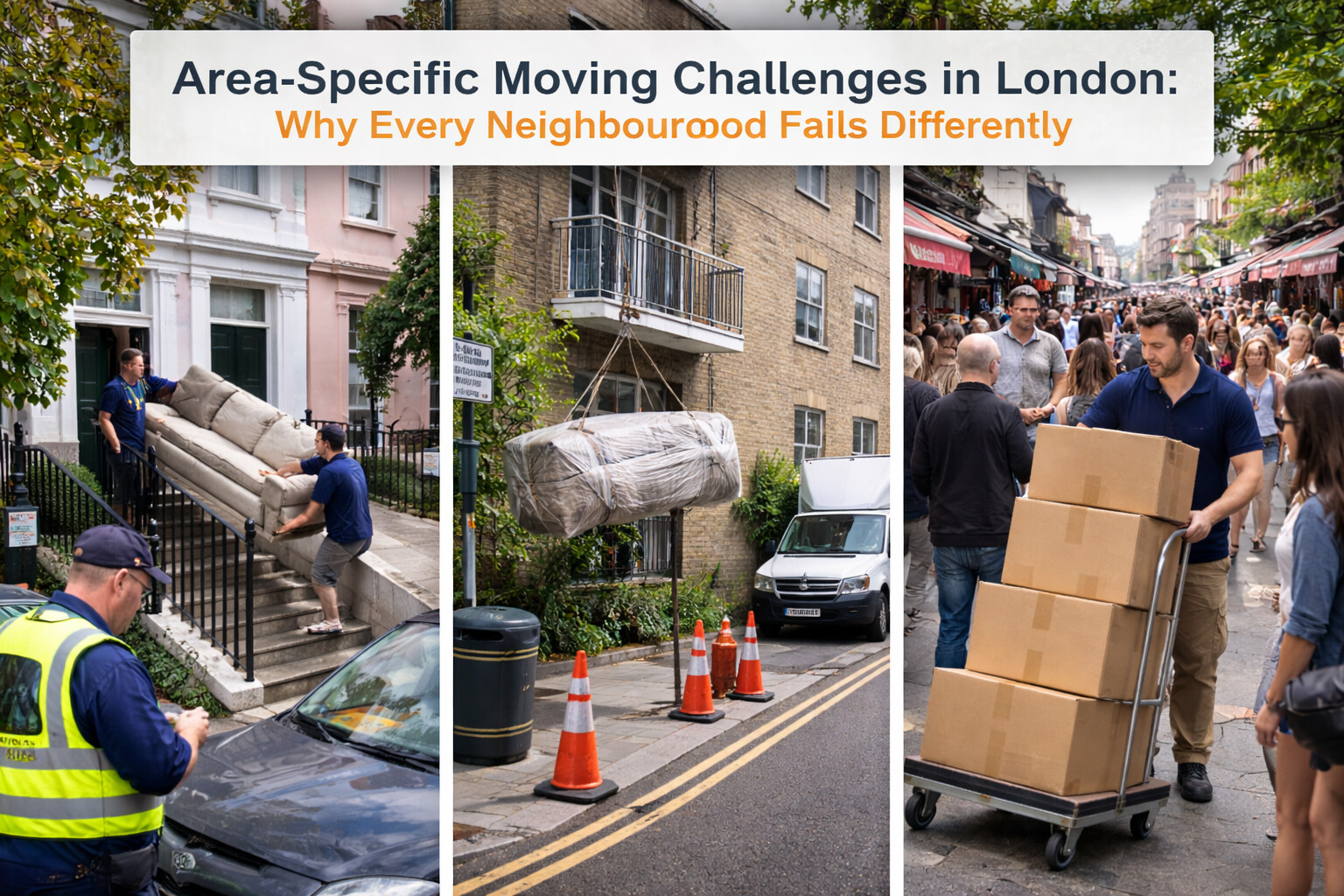



Student moves in London are often treated as small, simple relocations. In reality, student-heavy areas create some of the most time-sensitive, congested, and failure-prone moving conditions in the city. High turnover, narrow time windows, shared buildings, and intense seasonal demand combine to make student moves uniquely challenging.
This guide explains how student moving areas in London actually behave, why so many student moves go wrong, and how to plan effectively within environments that are defined by deadlines, density, and shared access.
For the full set of area-based guides, visit the pillar page:
https://blog.xvan.uk/areas-location-guides/
Why Student Areas Are a Separate Moving Category
Student areas differ from normal residential zones because they are shaped by:
- Fixed academic calendars
- End-of-tenancy deadlines
- Shared housing stock
- Short-term occupancy
- High volume of simultaneous moves
Unlike family or long-term residential moves, student moves are compressed into narrow timeframes, often with little flexibility.
What Defines a Student Moving Area in London?
Student moving areas are typically located around:
- Major universities and colleges
- Transport hubs with fast central access
- High-density rental housing clusters
From a moving perspective, these areas share common traits:
- High flatshare concentration
- Multiple moves happening on the same day
- Limited parking availability
- Buildings designed for turnover, not access
The result is competition for space, lifts, and time.
Turnover Pressure: The Core Problem
Student housing turnover creates moving pressure in waves:
- Late May to July (end of academic year)
- August to September (new intake)
- January (mid-year changes and deferrals)
During these periods:
- Parking becomes scarce
- Lifts are booked continuously
- Vans queue on residential streets
- Delays cascade across multiple moves
A “one-hour student move” is often unrealistic during peak season.
Housing Types Common in Student Areas
Shared Houses and HMOs
- Multiple tenants moving independently
- Overlapping move-out and move-in times
- Limited internal space
- High stair usage
One tenant’s delay affects everyone else.
Purpose-Built Student Accommodation
- Strict booking systems
- Fixed move-in/out slots
- Security-controlled access
- Zero tolerance for overruns
These buildings run like logistics hubs, not homes.
Converted Flats Near Campuses
- Narrow staircases
- No lifts
- Tight street access
- High enforcement risk
Access, not volume, dominates these moves.
Timing Windows: Why Student Moves Are So Fragile
Student moves are often constrained by:
- Same-day tenancy endings and beginnings
- Exam schedules
- Travel bookings
- International arrival/departure times
Missing a time slot can mean:
- Lost lift access
- Denied entry to accommodation
- Forced overnight storage
- Additional costs and stress
In student areas, timing mistakes are rarely recoverable.
Parking and Enforcement in Student Zones
Student areas often have:
- Resident-only parking
- Limited visitor allowances
- Active enforcement during turnover periods
Councils are aware of peak student moving days and often:
- Increase patrols
- Enforce loading limits strictly
- Issue fines quickly
Informal loading that works elsewhere often fails here.
Volume vs Access: The Student Move Paradox
Student moves are usually:
- Low volume
- High access difficulty
Common problems include:
- Long carry distances
- Multiple stair trips
- Lift wait times
- Repositioning vans repeatedly
This makes time per item unusually high.
Why Short Student Moves Still Go Wrong
Many student moves are:
- Same-area or same-street relocations
- Campus-to-campus moves
- Short-distance transfers
Despite this, they often fail due to:
- Overlapping schedules
- Building rules
- Enforcement pressure
- Lack of buffer time
Distance matters very little in student-heavy zones.
Cost Patterns in Student Moving Areas
| Cost Driver | Student Areas |
|---|---|
| Distance | Low |
| Time | High |
| Parking Risk | High |
| Waiting Time | Common |
| Failure Risk | High in peak season |
Cheap hourly bookings frequently overrun during student peak periods.
Common Mistakes Students Make
- Booking the smallest possible time slot
- Assuming lifts will be available
- Ignoring parking restrictions
- Packing late or poorly
- Scheduling moves on peak days without buffer
Most student move failures are predictable, not accidental.
How to Plan a Student Move Properly
A realistic student-area plan includes:
- Avoiding peak days where possible
- Booking early time slots
- Confirming building access rules
- Allowing buffer time for delays
- Choosing flexible services
Planning conservatively reduces stress more than saving a small amount of money.
Same-Day Student Move Chains
A common pattern in student areas:
- Student A moves out in the morning
- Student B moves in midday
- Student C moves in the afternoon
If one move overruns, all others are affected. This creates chain delays that are difficult to fix.
International Students and Extra Complexity
International student moves often involve:
- Tight arrival windows
- Language barriers
- Limited local knowledge
- Heavy luggage but few furniture items
These moves are logistically simple but time-sensitive, requiring careful coordination.
Using Xvan for Student Area Moves
The Xvan app is particularly suited to high-turnover, time-sensitive environments like student areas.
With Xvan, you can:
- Book flexible man and van services
- Match help levels to access reality
- Adjust timing without rigid packages
- Avoid overpaying for unnecessary capacity
Download Xvan (UK):
https://xvan.uk
Xvan is built for real student moving conditions, not ideal scenarios.
Frequently Asked Questions
Are student moves cheaper?
Not always. Time overruns are common during peak periods.
Is summer the hardest time to move?
Yes. Demand, enforcement, and congestion peak.
Are student areas more stressful to move in?
Yes, due to timing pressure and shared access.
Can small student moves fail?
Yes. Access and timing matter more than volume.
Final Summary
Student moving areas in London combine high turnover, tight deadlines, shared access, and enforcement pressure. These conditions make student moves far more complex than they appear.
Successful student moves depend on early planning, flexible timing, and realistic expectations. Treating them like quick, cheap relocations is the fastest way to encounter delays and stress.
For more detailed location-based guides, visit:
https://blog.xvan.uk/areas-location-guides/