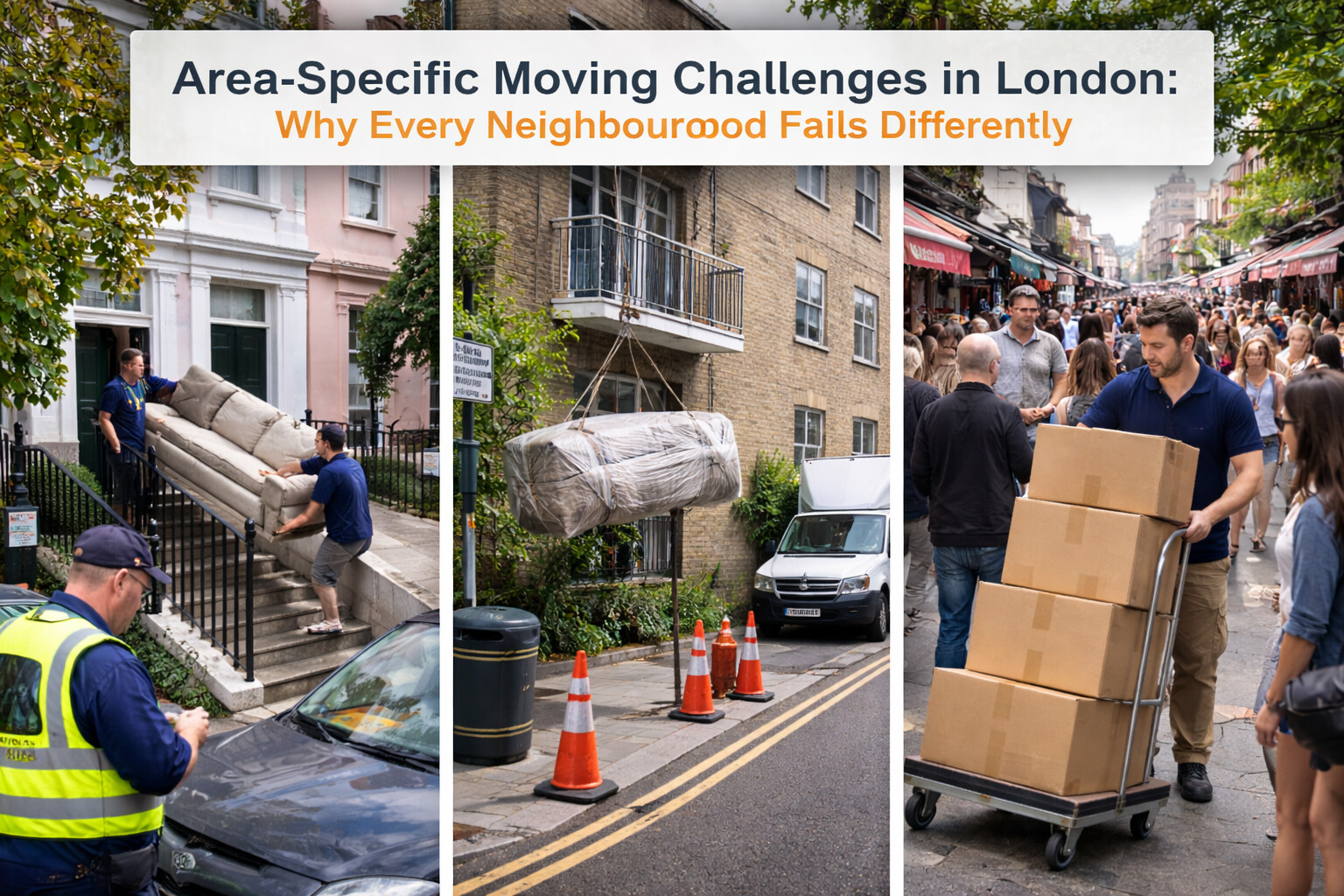



High-density residential areas are where London moving plans most often break down. These neighbourhoods concentrate people, buildings, vehicles, deliveries, and enforcement into very small spaces. The result is an environment where access, timing, and coordination matter more than distance or item count.
This guide explains how high-density areas in London actually behave on moving day, why even small moves become complex, and how to plan realistically when space, time, and tolerance are limited.
For the full collection of location-based guides, visit the pillar page:
https://blog.xvan.uk/areas-location-guides/
What Counts as a High-Density Residential Area?
From a moving perspective, high density is not just about population numbers. It usually means a combination of:
- Multi-storey apartment blocks
- Closely packed terraced housing
- Limited street width
- High car ownership
- Shared access points
- Constant delivery traffic
These areas are common across Inner London, regenerated East London zones, student clusters, and parts of West and South London.
Density compresses all moving variables into tight margins.
Why Density Is the Root Cause of Most Moving Problems
High density amplifies every small issue:
- One blocked loading bay affects multiple buildings
- One delayed lift booking disrupts several moves
- One enforcement officer can halt loading instantly
- One traffic obstruction can stall an entire street
In low-density areas, problems are isolated. In high-density areas, problems cascade.
Parking Scarcity: The Primary Constraint
In dense residential zones:
- Legal parking is limited
- Loading bays are shared
- Resident permits dominate
- Informal stopping is rarely tolerated
Even when parking exists, it is often:
- Too far from the entrance
- Time-limited
- Actively enforced
Carry distance becomes a core time and cost driver, especially for heavier items.
Vertical Living and Time Compression
High-density areas are strongly associated with vertical housing.
Implications include:
- Lift dependency
- Shared lift schedules
- Peak-time congestion inside buildings
- Mandatory lift bookings
Vertical movement changes the economics of a move:
- Fewer items moved per hour
- Higher fatigue
- Greater reliance on timing accuracy
A move that looks small on paper can take hours simply due to lift access.
Shared Buildings, Shared Risk
Many high-density moves happen in buildings where:
- Multiple residents move on the same day
- Deliveries compete with removals
- Management enforces strict rules
- Noise complaints are common
Typical building rules include:
- Fixed moving hours
- Lift padding requirements
- Damage deposits
- Security sign-in procedures
Failure to comply can stop a move entirely.
Enforcement Behaviour in Dense Areas
Councils prioritise high-density streets for enforcement because:
- Obstructions affect more people
- Complaints are more frequent
- Traffic impact is higher
As a result:
- Wardens patrol more often
- Camera enforcement is common
- Tolerance for “quick loading” is low
Density increases the visibility and risk of every action.
Density vs Volume: A Critical Distinction
High-density moves are often:
- Low to medium volume
- High time cost
This reverses the usual planning logic. Instead of asking:
“How much stuff do I have?”
You should ask:
“How quickly can each item realistically be moved?”
In dense areas, access speed matters more than item count.
Same-Day Congestion Effects
Dense residential areas often experience:
- Multiple moves per building
- Overlapping delivery schedules
- Refuse collection conflicts
- Ride-hailing and courier traffic
These interactions create:
- Queueing delays
- Van repositioning
- Missed loading windows
Planning without buffer time is especially risky here.
Cost Patterns in High-Density Areas
| Cost Driver | Impact |
|---|---|
| Distance | Low |
| Time | Very high |
| Parking | High risk |
| Waiting | Common |
| Overruns | Frequent |
Moves in dense areas exceed time estimates more often than in any other environment.
Common Mistakes People Make
- Treating density as a minor inconvenience
- Booking based on item count alone
- Ignoring lift and building rules
- Assuming parking will “work itself out”
- Scheduling tight, inflexible time slots
These mistakes are amplified by density.
How to Plan a High-Density Move Properly
A realistic approach includes:
- Checking access at street and building level
- Confirming lift availability and booking rules
- Measuring real carry distance
- Allowing generous buffer time
- Choosing flexible, adaptive services
In dense areas, conservatism beats optimism.
When Density Is Highest (and When to Avoid)
Density pressure peaks:
- Weekends
- Month-end and month-start
- Summer moving season
- Student turnover periods
If possible, moving outside these windows reduces risk significantly.
Using Xvan for High-Density Moves
The Xvan app is designed for access-driven and time-sensitive moves, which makes it particularly effective in high-density residential areas.
With Xvan, you can:
- Match services to access constraints
- Choose help levels based on vertical load
- Avoid underbooking time
- Adapt when conditions change
Download Xvan (UK):
https://xvan.uk
Xvan plans for how dense areas really behave, not ideal conditions.
Frequently Asked Questions
Are high-density moves always harder?
Almost always, because access constraints compound.
Does having fewer items help?
Only slightly. Access speed matters more.
Are fines more likely?
Yes. Enforcement focuses on dense streets.
Can planning really reduce problems?
Yes. Most failures are planning-related.
Final Summary
High-density residential areas turn ordinary moves into logistical challenges. Limited space, shared access, vertical living, and strict enforcement combine to punish poor planning quickly.
Successful moves in dense areas depend on realistic timing, access awareness, and flexibility — not distance or optimism.
For more detailed location-based guides, visit:
https://blog.xvan.uk/areas-location-guides/