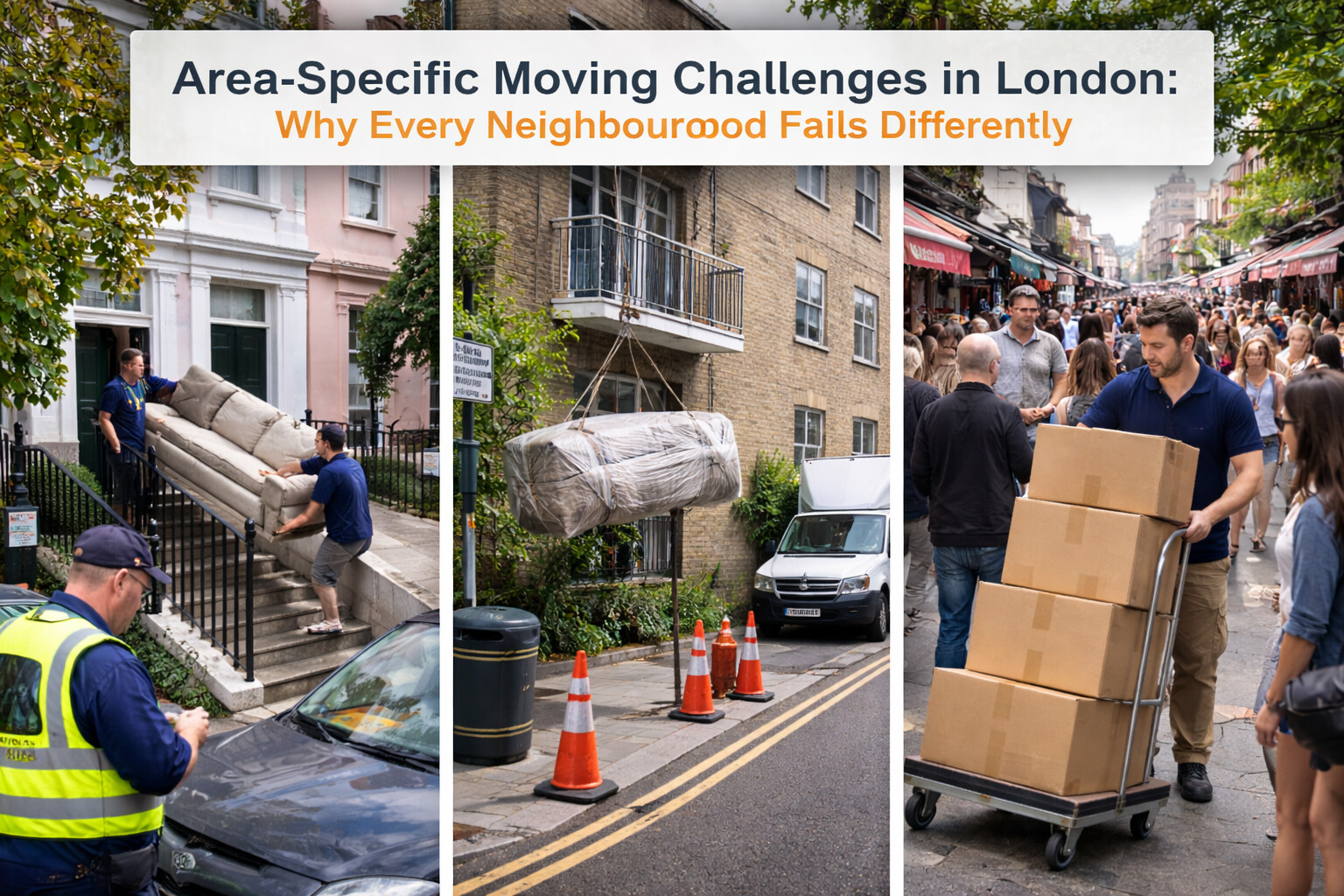


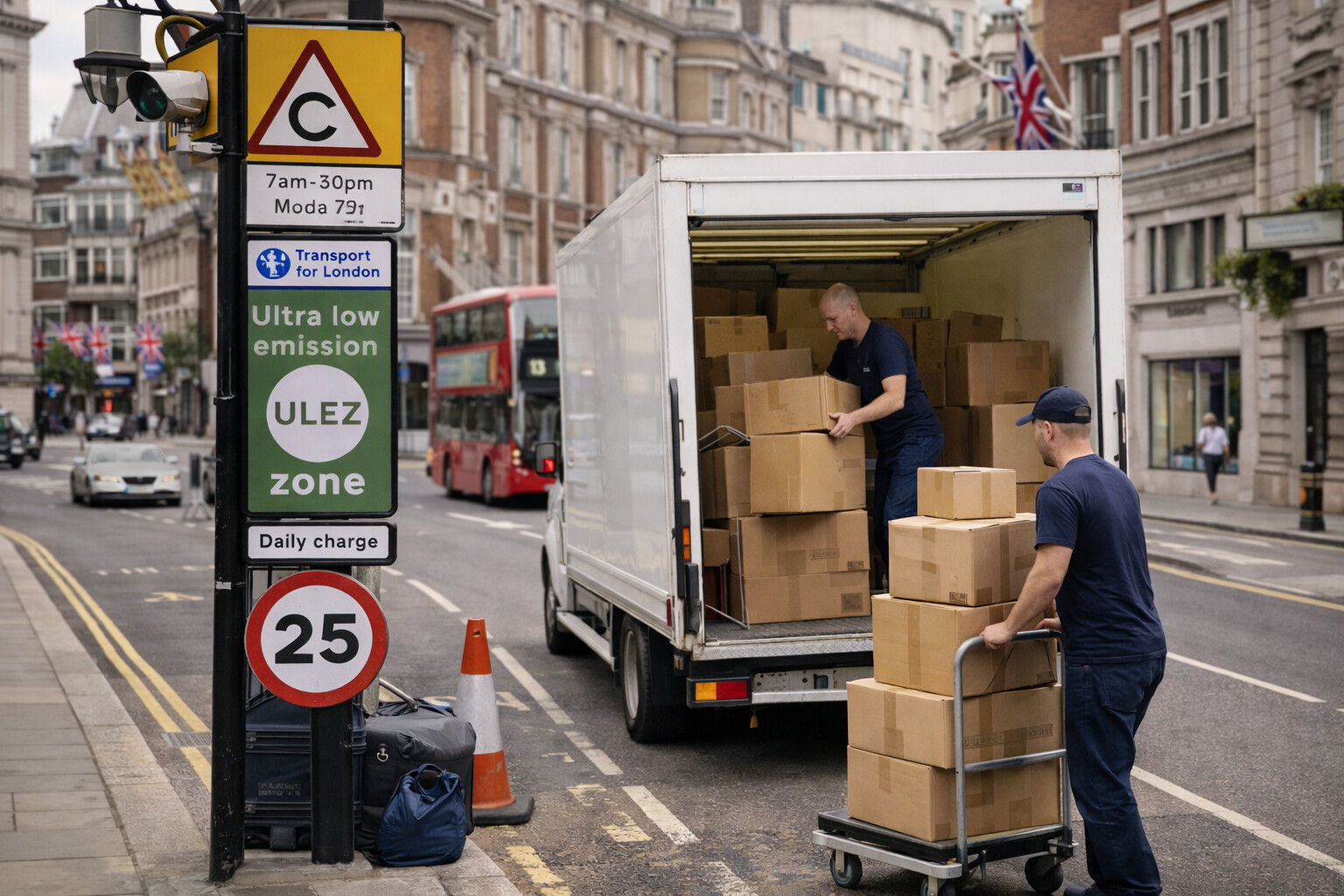
Moving in areas covered by ULEZ and other restricted zones is not just a logistics issue — it is a compliance problem. Many moves that appear straightforward fail or become unexpectedly expensive because people treat restricted zones as a minor detail instead of a core planning factor.
This guide explains how moving in ULEZ and restricted areas in London actually works, what restrictions really affect moving vans, where hidden costs appear, and how to plan correctly so compliance does not derail your move.
For the full collection of location-based guides, visit the pillar page:
https://blog.xvan.uk/areas-location-guides/
What Counts as a Restricted Zone for Moving?
From a moving perspective, restricted zones include areas affected by:
- ULEZ (Ultra Low Emission Zone)
- Congestion-related controls
- Camera-enforced traffic restrictions
- Time-based access rules
- Bus lanes and red routes
These zones overlap heavily with:
- Central London
- Inner London boroughs
- Major arterial roads
A move can cross multiple restricted zones even if it starts and ends nearby.
Why Restricted Zones Change Moving Economics
Restricted zones affect moves in ways that standard planning does not account for:
- Daily compliance charges
- Route limitations
- Time-window restrictions
- Enforcement cameras
- Increased risk of fines
These factors convert simple mileage-based planning into rule-based planning.
ULEZ Compliance: What Actually Matters
ULEZ compliance depends on:
- Vehicle emission standards
- Vehicle registration details
- Daily zone coverage
Key realities:
- Charges apply per day, not per trip
- Crossing the boundary even briefly triggers charges
- Vans may be compliant while still restricted elsewhere
Many people mistakenly assume:
“If the van is modern, it’s fine.”
In practice, verification matters more than assumptions.
Congestion and Red Routes: The Silent Constraints
Restricted areas often include:
- Red routes where stopping is prohibited
- Time-limited loading bays
- Bus lanes with camera enforcement
For moving vans, this means:
- Stopping legality is highly specific
- Loading exemptions are narrow
- Enforcement is automatic and unforgiving
A legal stop on one street can become illegal a few metres later.
Route Planning Becomes Critical
In unrestricted areas, route choice affects speed.
In restricted zones, route choice affects legality and cost.
Common route-related issues:
- Sat-navs routing through restricted roads
- Temporary roadworks forcing detours
- Unintended boundary crossings
A poorly chosen route can:
- Trigger multiple charges
- Cause missed time windows
- Increase enforcement exposure
Parking and Loading in Restricted Areas
Restricted zones often overlap with:
- Controlled Parking Zones
- Red routes
- High-enforcement streets
This creates a triple constraint:
- Limited stopping locations
- Short loading windows
- High fine probability
As a result:
- Carry distances increase
- Labour time increases
- Stress levels increase
Parking planning is non-negotiable in these zones.
Time Sensitivity and Enforcement Windows
Many restrictions are time-based:
- Morning and evening peak bans
- Daytime loading limits
- Weekend-specific rules
Mistiming a move by even 30 minutes can mean:
- Legal loading becomes illegal
- Vans must relocate
- Entire schedules collapse
Restricted zones punish poor timing more than any other environment.
Cost Patterns in Restricted-Zone Moves
| Cost Factor | Impact |
|---|---|
| Compliance charges | Guaranteed if applicable |
| Parking risk | Very high |
| Route detours | Common |
| Carry distance | Increased |
| Fine exposure | High |
Moves in restricted zones often exceed budgets due to non-obvious costs, not labour rates.
Common Mistakes People Make
- Assuming ULEZ is the only restriction
- Ignoring red route rules
- Letting sat-nav choose routes blindly
- Not checking loading legality
- Treating compliance costs as optional
These mistakes are systematic and repeatable.
How Restricted Zones Affect “Short” Moves
Short-distance moves are particularly vulnerable because:
- They still trigger daily charges
- They often cross multiple restricted roads
- Time savings are minimal
A one-mile move inside a restricted zone can cost more than a five-mile move outside it.
How to Plan a Move in Restricted Zones Properly
A correct approach includes:
- Verifying vehicle compliance in advance
- Mapping routes manually, not just via apps
- Checking loading legality street by street
- Planning precise timing windows
- Allowing buffer time for enforcement-related delays
In restricted zones, planning replaces improvisation.
Using Xvan for ULEZ and Restricted-Zone Moves
The Xvan app is built to support compliance-aware moving, especially in restricted and enforcement-heavy areas.
With Xvan, you can:
- Match services to compliance requirements
- Avoid vehicles unsuitable for restricted zones
- Plan moves around access and timing rules
- Reduce risk of fines and delays
Download Xvan (UK):
https://xvan.uk
Xvan helps you move within the rules that actually apply, not assumptions.
Frequently Asked Questions
Does every van pay ULEZ?
No, but you must verify compliance before the move.
Are congestion and ULEZ the same?
No. They are separate systems with different rules.
Can I avoid charges by moving quickly?
No. Charges are time-independent once triggered.
Are fines common?
Yes. Enforcement is automated and consistent.
Final Summary
ULEZ and restricted zones transform moving into a compliance-driven process. Costs, timing, routes, and legality all matter more than distance or item count.
If you plan carefully — verifying compliance, mapping routes, and respecting restrictions — moves in these zones are manageable. If you don’t, they become expensive very quickly.
For more detailed location-based guides, visit:
https://blog.xvan.uk/areas-location-guides/