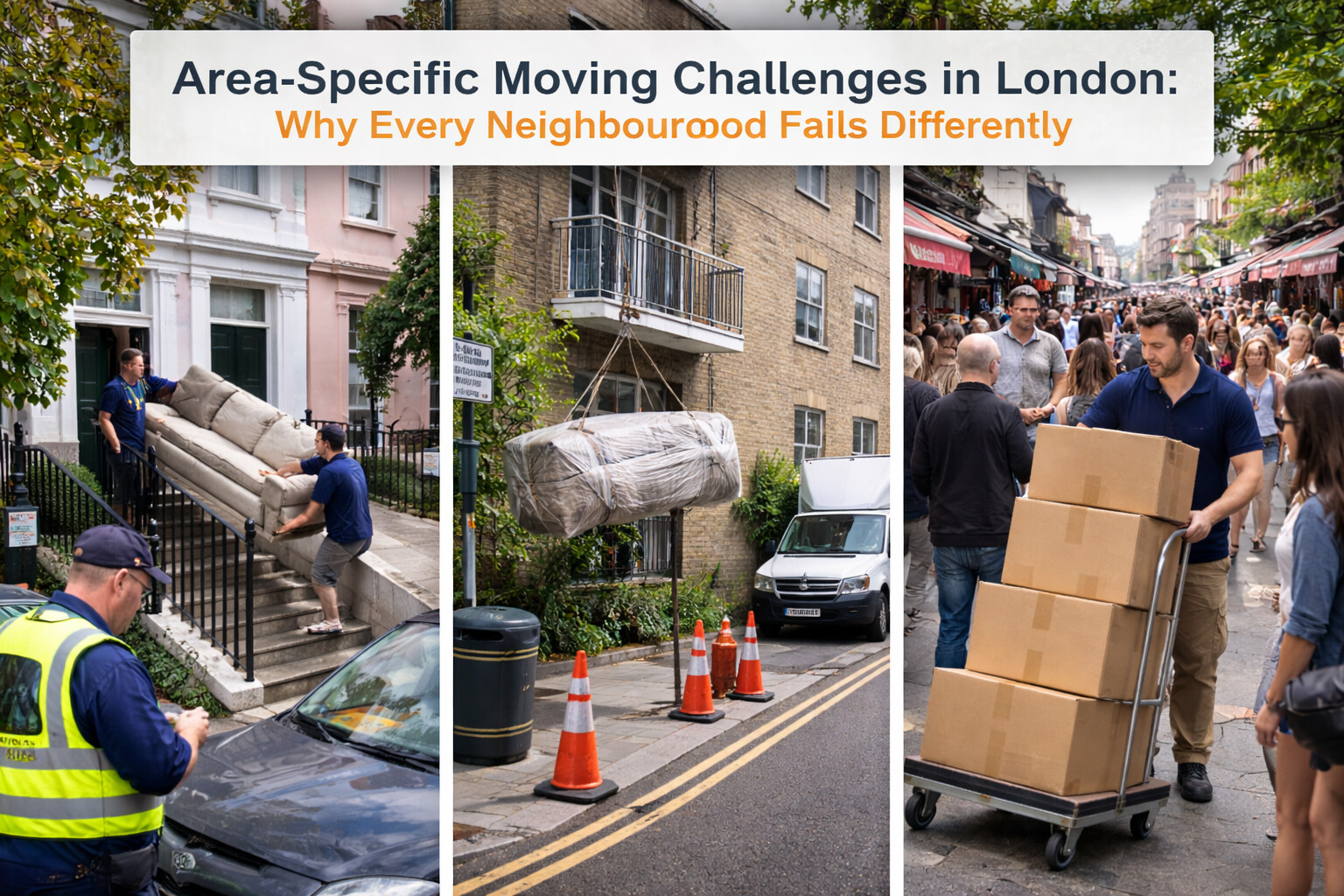



In London, street type is one of the most underestimated variables in moving. Two properties can be the same size, in the same borough, and even on the same postcode — yet the move can feel completely different depending on whether the street is a busy urban road or a quiet residential street.
Many planning mistakes happen because people focus on distance, item count, or borough rules, while ignoring the single factor that most directly affects loading speed, legality, stress, and risk: the street itself.
This guide explains how busy urban streets and quiet residential streets behave differently on moving day, why each introduces its own risks, and how to plan correctly for both.
For the full collection of location-based guides, visit the pillar page:
https://blog.xvan.uk/areas-location-guides/
Why Street Type Is a Separate Moving Variable
Street type influences:
- Where a van can legally stop
- How long it can remain
- How visible the move is to enforcement
- How residents and businesses react
- How predictable loading becomes
Borough rules set the framework, but street behaviour determines reality.
Ignoring street type is one of the most common causes of:
- Unexpected delays
- Forced van relocation
- Parking fines
- Time overruns
What Defines a Busy Urban Street?
From a moving perspective, busy urban streets typically include:
- High traffic flow
- Mixed residential and commercial use
- Shops, cafés, offices, or schools
- Delivery activity throughout the day
- High enforcement visibility
These streets are common across Inner London and transport corridors.
Typical characteristics
- Limited or no stopping
- Red routes or bus lanes nearby
- Time-based loading windows
- Camera enforcement
- Frequent complaints from businesses
On these streets, legality and timing dominate everything.
Moving on Busy Urban Streets: The Reality
Parking and Loading
- Legal loading points are scarce
- Loading bays are shared and contested
- Informal stopping is rarely tolerated
Even when loading is permitted:
- Time limits are short
- Enforcement is active
- Errors are punished quickly
Visibility Risk
Moves on busy streets are:
- Highly visible
- More likely to be challenged
- More likely to attract enforcement
You are not just moving — you are interrupting traffic flow.
Time Windows: The Hidden Constraint
Busy urban streets often allow loading only:
- Outside peak hours
- During narrow mid-day windows
- With strict cut-off times
Missing a window by minutes can:
- Make loading illegal
- Force van relocation
- Cause cascading delays
On these streets, timing precision matters more than speed.
Carry Distance on Busy Streets
Because vans cannot stop directly outside:
- Carry distances increase
- Labour effort increases
- Loading speed drops
A small move can become physically demanding simply due to distance between legal stopping points and the entrance.
What Defines a Quiet Residential Street?
Quiet residential streets usually feature:
- Low traffic flow
- Predominantly housing
- Limited commercial activity
- Lower enforcement presence
- Higher informal tolerance
These streets are more common in suburban zones and residential pockets within Inner London.
Moving on Quiet Residential Streets: The Reality
Parking and Access
- Parking is often available nearby
- Vans can usually stop closer to entrances
- Carry distance is shorter
This creates the impression of simplicity — but it introduces different risks.
The False Security of Quiet Streets
People moving on quiet residential streets often:
- Plan less carefully
- Choose smaller vans
- Book tighter time slots
- Assume flexibility will save them
This leads to:
- Underbooking
- Fatigue-related delays
- Overruns due to volume
Quiet streets reduce enforcement risk but do not reduce workload.
Enforcement Differences: Visibility vs Tolerance
| Factor | Busy Urban Streets | Quiet Residential Streets |
|---|---|---|
| Enforcement visibility | Very high | Lower |
| Tolerance | Low | Variable |
| Loading legality | Strict | Often flexible |
| Complaint risk | Businesses & traffic | Neighbours |
| Main failure cause | Access denial | Underplanning |
Each street type punishes different mistakes.
Noise and Neighbour Sensitivity
Quiet residential streets are often:
- Noise-sensitive
- Family-oriented
- Owner-occupied
Moves that:
- Start early
- Run late
- Block driveways
can trigger neighbour complaints, which escalate enforcement even in “quiet” areas.
Traffic Interaction Effects
Busy Streets
- Vans disrupt traffic
- Drivers react aggressively
- Enforcement responds quickly
Quiet Streets
- Vans block driveways
- Residents need access
- Emergency access must be preserved
Both environments require situational awareness, just in different ways.
Cost Patterns by Street Type
| Cost Driver | Busy Urban | Quiet Residential |
|---|---|---|
| Distance | Low | Low |
| Time overruns | High (access) | High (volume) |
| Parking fines | High risk | Lower risk |
| Labour fatigue | Moderate | High |
| Planning errors | Timing | Underestimation |
Street type changes how costs escalate, not whether they do.
Common Mistakes on Busy Urban Streets
- Missing loading windows
- Trusting sat-nav over signage
- Underestimating enforcement speed
- Not planning carry distance
- Assuming “quick load” is tolerated
These mistakes fail fast.
Common Mistakes on Quiet Residential Streets
- Underestimating item volume
- Booking vans too small
- Packing on the day
- Ignoring fatigue buildup
- Assuming neighbours won’t mind
These mistakes fail slowly — but still fail.
How to Plan Based on Street Type
For Busy Urban Streets
- Check loading legality street-by-street
- Identify exact time windows
- Plan carry distance conservatively
- Allow buffer time
- Choose flexible services
For Quiet Residential Streets
- Assess full volume honestly
- Choose correct van size
- Finish packing early
- Allow realistic loading time
- Plan for fatigue, not enforcement
Street-aware planning eliminates most surprises.
Mixed Street-Type Moves
Many moves start on one type and end on another:
- Busy → Quiet
- Quiet → Busy
In these cases:
- Plan around the more restrictive street
- Let the hardest environment set the rules
Easy access at one end never compensates for restricted access at the other.
Using Xvan for Street-Type-Aware Moves
The Xvan app is designed to match services to street-level reality, not assumptions.
With Xvan, you can:
- Choose services based on access vs volume
- Avoid underbooking time or capacity
- Adapt to enforcement-heavy or volume-heavy streets
- Reduce risk on both busy and quiet roads
Download Xvan (UK):
https://xvan.uk
Xvan focuses on how your street actually behaves, not how it looks.
Frequently Asked Questions
Are busy streets always harder?
They are harder legally and logistically, even for small moves.
Are quiet streets always easier?
They reduce enforcement pressure but increase volume-related risk.
Which street type causes more overruns?
Both — but for different reasons.
Should street type affect van choice?
Yes. It directly affects access and efficiency.
Final Summary
Busy urban streets and quiet residential streets create two different moving environments. One punishes timing and legality errors; the other punishes underestimation and poor preparation.
Successful London moves depend on identifying which environment you are dealing with — and planning accordingly. Street type matters more than distance, and often more than borough.
For more detailed area-based guides, visit:
https://blog.xvan.uk/areas-location-guides/