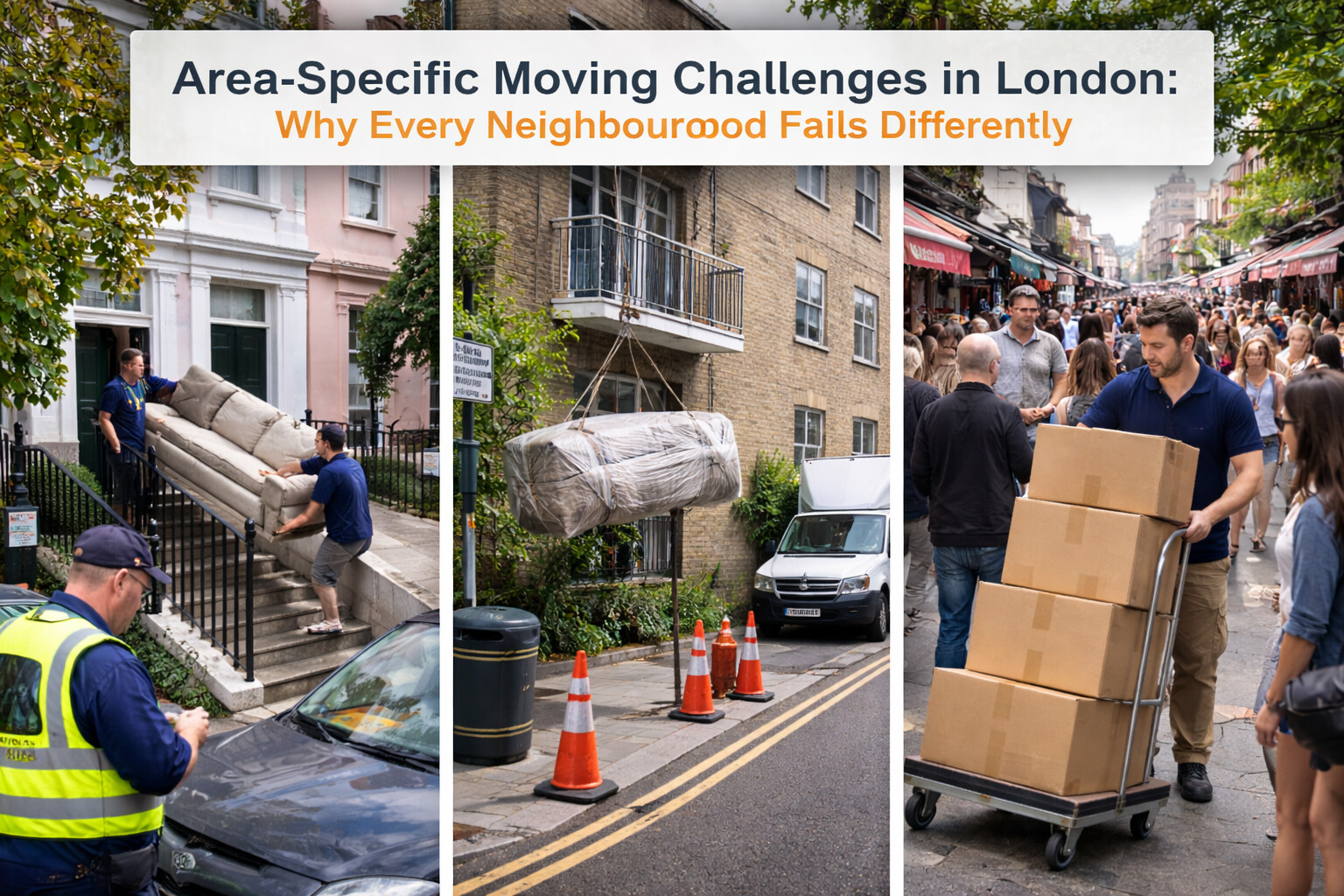


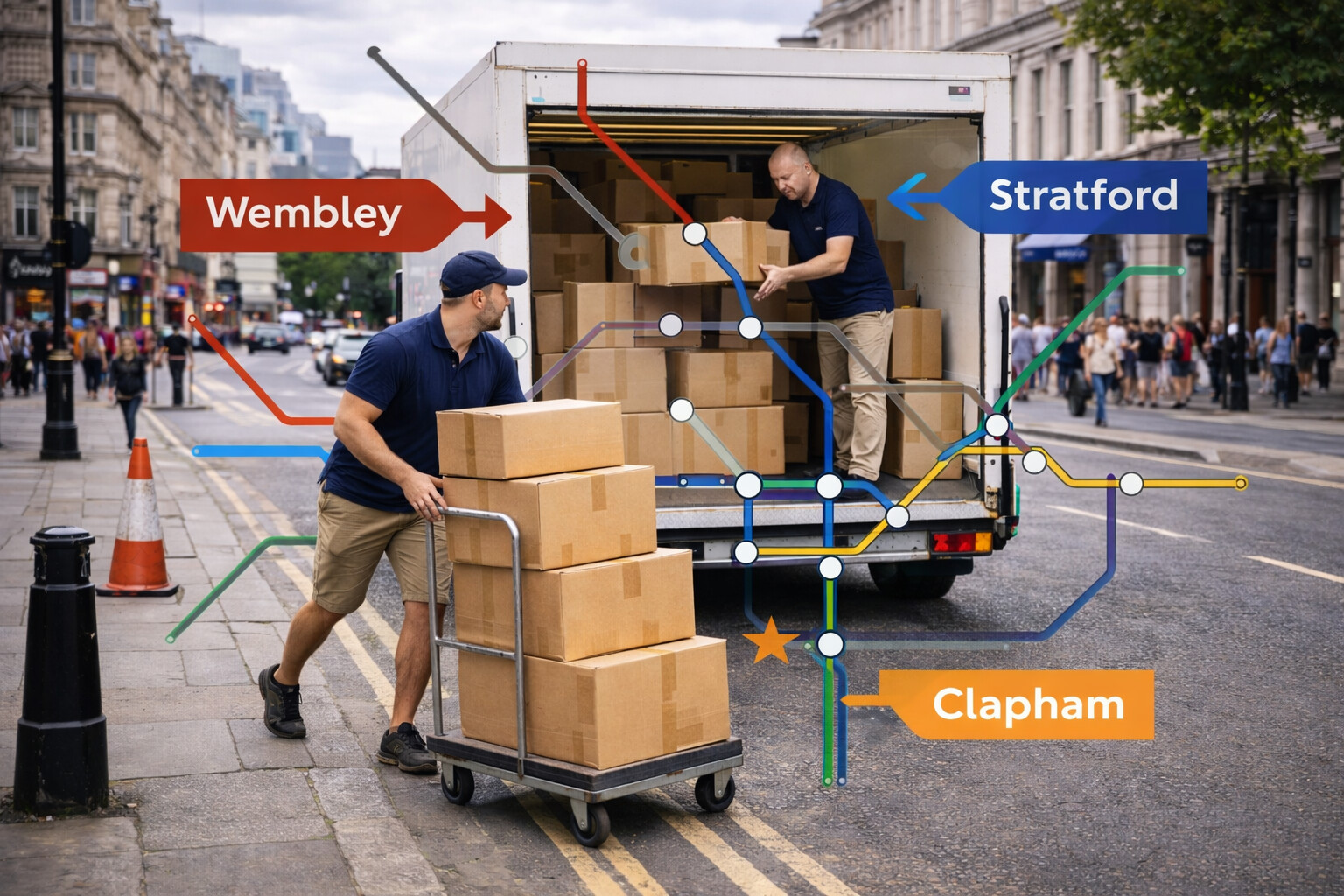
In London, moving difficulty is shaped as much by direction as by location. Two moves covering the same mileage can behave very differently depending on whether you are moving inward, outward, across zones, or along transport corridors. This is because popular moving routes concentrate traffic patterns, enforcement behaviour, housing types, and access constraints in predictable ways.
This guide explains how London’s most common moving routes actually behave, why some routes consistently cause overruns, and how to plan based on route dynamics, not just start and end points.
For the full collection of area-based guides, visit the pillar page:
https://blog.xvan.uk/areas-location-guides/
Why “Route” Is a Planning Variable (Not Just a Line on a Map)
Most people plan moves by asking:
- How far is it?
- How long should it take?
Experienced planners ask:
- Which direction is the move?
- Which zones does it cross?
- Which arterial roads are involved?
- Where does enforcement peak along the route?
Routes influence:
- Travel time reliability
- Enforcement exposure
- Timing windows
- Fatigue and efficiency
- Cost overruns
Ignoring route behaviour is one of the biggest causes of failed London moves.
The Four Core Route Types in London
From a moving perspective, most London relocations fall into one of four route categories:
- Inner → Outer London
- Outer → Inner London
- Inner → Inner (cross-zone)
- Outer → Outer (suburban cross-moves)
Each behaves differently and punishes different mistakes.
Route Type 1: Inner → Outer London Moves
Why This Route Is So Common
Typical reasons include:
- Upsizing from flats to houses
- Family moves
- Leaving high-density zones
How It Behaves
- Difficult loading at origin
- Easier unloading at destination
- Early delays are common
- Pace improves later in the day
Common Problems
- Underestimating inner-area access difficulty
- Losing time early and trying to “make it up” later
- Fatigue from dense-area loading
Planning Priority
Plan around the origin, not the destination. If the start point fails, the whole route fails.
Route Type 2: Outer → Inner London Moves
Why This Route Is Risky
This route is underestimated because loading feels easy.
How It Behaves
- Smooth loading
- High confidence early on
- Severe access constraints at destination
- Enforcement pressure peaks late in the move
Common Problems
- Missing loading windows at destination
- Parking assumptions failing
- Time overruns caused by enforcement, not labour
Planning Priority
Plan around the destination. Easy loading does not compensate for restricted unloading.
Route Type 3: Inner → Inner Cross-Zone Moves
Why These Are Deceptively Hard
These moves look short on paper but:
- Cross multiple enforcement regimes
- Pass through congested corridors
- Double exposure to access problems
How They Behave
- Short driving distance
- Long total time
- High carry distance at both ends
Common Problems
- Overconfidence due to short mileage
- Poor timing alignment
- Multiple parking risks
Planning Priority
Treat as a time-critical move, not a short one.
Route Type 4: Outer → Outer Cross-Suburban Moves
Why These Feel Easy
- Parking is usually manageable
- Streets are wider
- Enforcement is lighter
Hidden Challenges
- Long distances
- Multiple trips if underbooked
- Fatigue accumulation
Common Problems
- Booking vans too small
- Underestimating travel time
- Poor route sequencing
Planning Priority
Focus on volume and distance, not access.
Arterial Roads: The Silent Route Killers
Popular moving routes often rely on major roads:
- North–South connectors
- East–West corridors
- River crossings
These roads introduce:
- Unpredictable congestion
- Camera enforcement
- Time-based restrictions
A route that looks optimal on a map can become unusable during peak hours.
Zone Crossings: Where Time Is Lost
Each zone boundary crossed increases:
- Traffic density
- Enforcement likelihood
- Timing sensitivity
Moves that cross:
- Zone 2 ↔ Zone 4
- Zone 3 ↔ Zone 1
are especially vulnerable to time overruns if not planned conservatively.
Directional Traffic Patterns
Traffic behaviour changes by direction:
- Inbound traffic peaks in mornings
- Outbound traffic peaks in evenings
- Cross-city traffic peaks mid-day
Scheduling a move against traffic flow can save significant time — if enforcement windows allow it.
Route-Based Cost Patterns
| Route Type | Main Cost Driver | Typical Overrun Cause |
|---|---|---|
| Inner → Outer | Access at origin | Delayed start |
| Outer → Inner | Access at destination | Enforcement |
| Inner → Inner | Time & carry distance | Dual restrictions |
| Outer → Outer | Distance & volume | Underbooking |
Understanding this table prevents most budgeting surprises.
Common Route-Related Mistakes
- Planning by mileage only
- Ignoring peak traffic direction
- Letting sat-nav choose routes blindly
- Underestimating enforcement on connectors
- Assuming early delays can be recovered
Routes don’t forgive optimism.
How to Plan a Move by Route (Properly)
A route-aware plan includes:
- Identifying route type first
- Mapping zone crossings manually
- Scheduling against traffic where possible
- Planning around the most restrictive point
- Allowing buffer time at both ends
Route behaviour should shape timing, not just navigation.
Using Xvan for Route-Aware Moves
The Xvan app is designed to handle route-based complexity, not just point-to-point distance.
With Xvan, you can:
- Match services to route type
- Avoid underestimating access at critical points
- Plan flexibly around traffic and enforcement
- Reduce overruns caused by poor route assumptions
Download Xvan (UK):
https://xvan.uk
Xvan plans for how London routes actually behave, not how they look.
Frequently Asked Questions
Does route matter more than distance?
Often yes, especially within Inner London.
Are short routes always faster?
No. Short inner-city routes often take the longest.
Which route type is hardest?
Outer → Inner and Inner → Inner routes are most failure-prone.
Can route planning really reduce cost?
Yes. Most overruns are route-related.
Final Summary
In London, direction matters. Popular moving routes concentrate congestion, enforcement, and access constraints in predictable ways. Two moves of equal distance can produce completely different outcomes depending on route type and timing.
If you plan by route behaviour instead of mileage, you eliminate most London moving surprises before they happen.