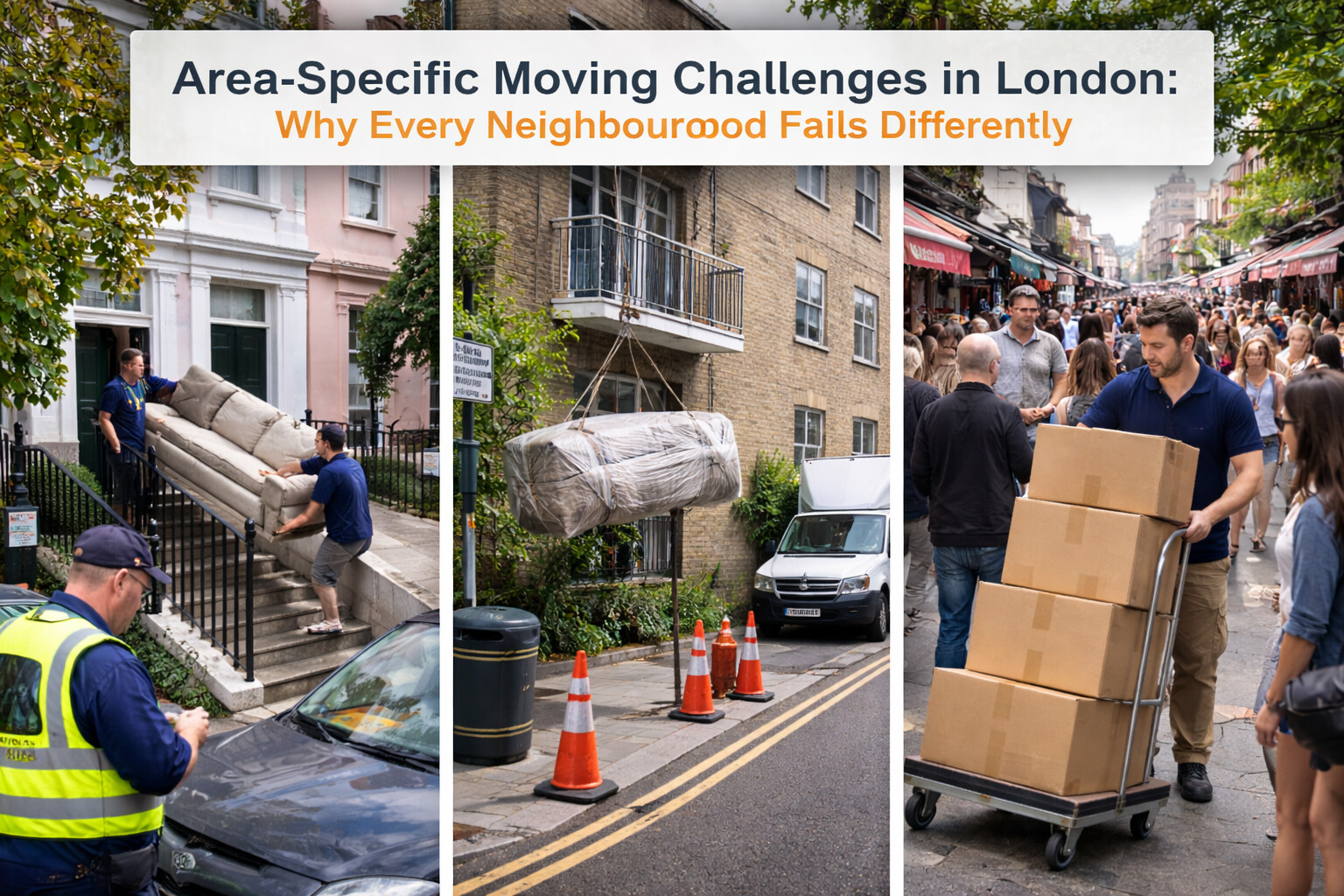


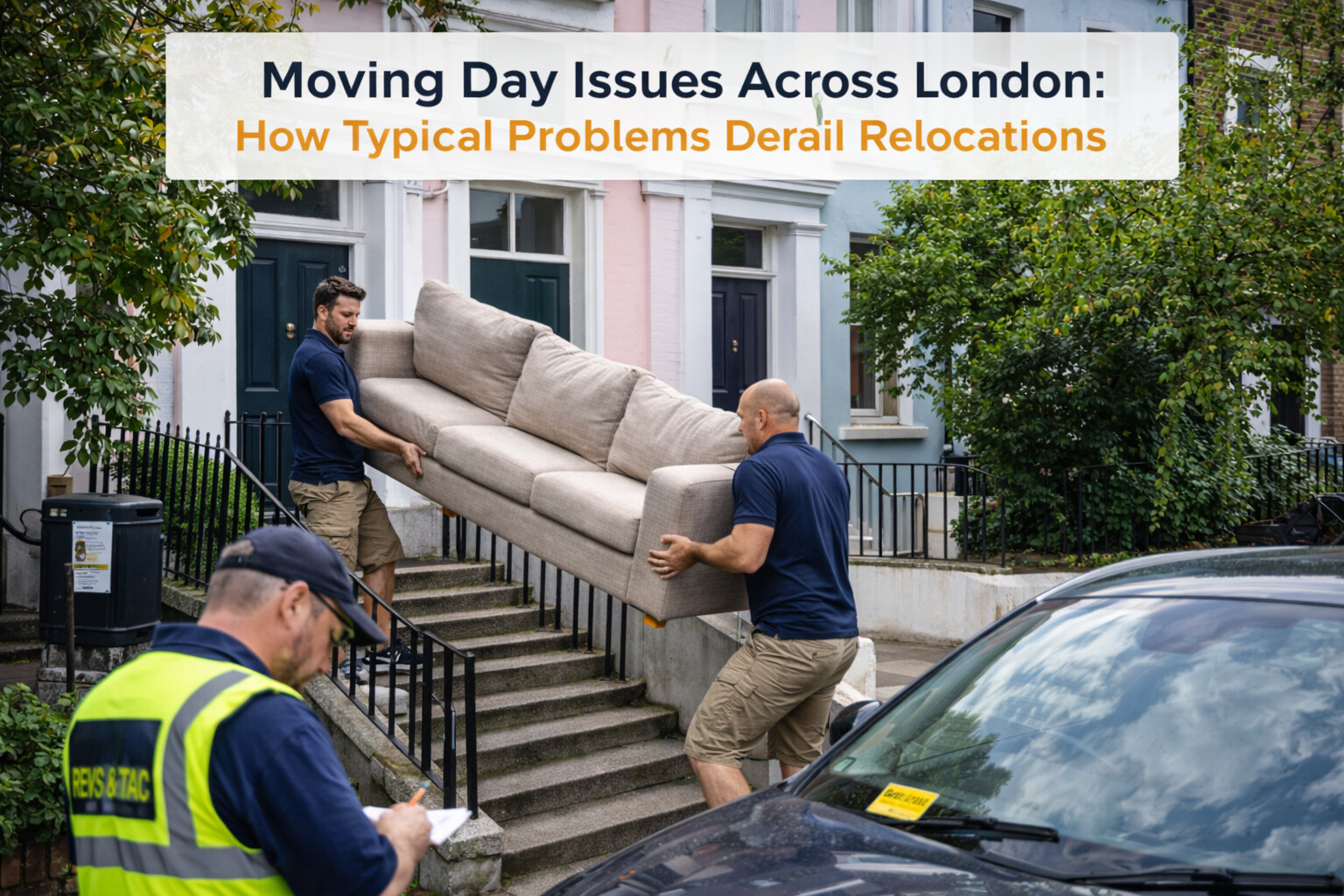
Moving within London is often discussed as one category, but in practice residential-area moves and commercial-area moves operate under entirely different rules, risks, and failure patterns. Treating them as similar is one of the fastest ways to cause delays, fines, and budget overruns.
This guide explains how residential and commercial areas in London behave differently on moving day, what each environment punishes, and how to plan correctly when your move crosses from one type to the other.
For the full collection of area-based guides, visit the pillar page:
https://blog.xvan.uk/areas-location-guides/
Why Area Type Matters More Than Property Type
People often think in terms of:
- House vs flat
- Office vs shop
But from a logistics perspective, area type matters more than property type.
A flat in a residential street behaves very differently from a flat above a shop on a commercial high street. Likewise, a small office in a residential block behaves differently from the same office on a business corridor.
Area type determines:
- Enforcement behaviour
- Loading tolerance
- Time windows
- Complaint triggers
- Visibility risk
What Defines a Residential Area (Moving Perspective)
Residential areas are typically characterised by:
- Predominantly housing use
- Lower daytime traffic
- Residents rather than customers
- Variable enforcement intensity
- Informal tolerance in some streets
These areas exist across both Inner and Outer London.
Typical residential traits
- Parking often available nearby
- Vans less visible
- Complaints come from neighbours
- Noise sensitivity is higher
Residential areas feel forgiving — but only up to a point.
What Defines a Commercial Area (Moving Perspective)
Commercial areas include:
- High streets
- Business districts
- Retail corridors
- Mixed-use zones with active storefronts
Typical traits:
- Constant traffic and deliveries
- High pedestrian flow
- Strict enforcement
- Zero tolerance for obstruction
Commercial areas are designed for flow, not stopping.
Residential Area Moves: Where They Usually Go Wrong
The False Sense of Ease
In residential areas, people often:
- Plan casually
- Underestimate volume
- Choose smaller vans
- Book tight time slots
Because enforcement pressure feels lower, discipline drops.
Common Residential-Area Failure Patterns
- Volume underestimation
Houses and long-term flats hide more items than expected. - Fatigue-driven slowdown
Moves start smoothly, then collapse mid-day. - Neighbour sensitivity escalation
Noise, blocked driveways, or prolonged loading trigger complaints. - Late overruns
Residential moves often finish later than planned.
Residential areas punish underplanning, not access mistakes.
Commercial Area Moves: Where They Usually Go Wrong
The Illusion of Professionalism
People assume:
- Businesses are used to deliveries
- Loading will be organised
- Access will be formalised
In reality, commercial areas are less tolerant, not more.
Common Commercial-Area Failure Patterns
- Immediate enforcement
Vans stopping incorrectly are ticketed quickly. - Loading window collapse
Missed slots often cannot be recovered. - Pedestrian interference
Foot traffic slows loading dramatically. - Visibility escalation
Moves attract attention from wardens, security, and businesses.
Commercial areas punish timing and legality errors instantly.
Parking Behaviour: Residential vs Commercial
| Factor | Residential Areas | Commercial Areas |
|---|---|---|
| Parking availability | Often nearby | Rare |
| Tolerance | Variable | Very low |
| Enforcement speed | Moderate | Fast |
| Informal loading | Sometimes tolerated | Rarely tolerated |
| Complaints | Neighbours | Businesses & authorities |
Parking mistakes in residential areas cost time.
Parking mistakes in commercial areas cost fines and forced relocation.
Time Sensitivity Differences
Residential Areas
- Flexible starts and finishes
- Less rigid loading windows
- Overruns tolerated (until late)
Commercial Areas
- Narrow legal windows
- Peak-hour bans
- Zero recovery once a window is missed
Residential areas fail slowly.
Commercial areas fail immediately.
Noise and Behaviour Expectations
Residential areas:
- Sensitive to early morning or late evening noise
- Tolerant during daytime if respectful
Commercial areas:
- Less noise-sensitive
- Extremely sensitive to obstruction and disruption
Different complaints, different triggers.
Vertical vs Horizontal Movement
Residential areas often involve:
- Houses (horizontal movement)
- Stairs but shorter carry distances
Commercial areas often involve:
- Flats above shops
- Offices above retail
- Long corridors and stair access
Commercial vertical access often combines stairs + enforcement pressure — a difficult mix.
Mixed-Use Areas: The Worst of Both Worlds
Many London streets are mixed-use:
- Residential above
- Commercial below
These areas combine:
- Residential noise sensitivity
- Commercial enforcement pressure
Moves here fail due to conflicting expectations:
- Residents want quiet
- Businesses want flow
- Enforcement wants compliance
Planning must satisfy all three.
Residential → Commercial Moves
Common scenario:
- Home → office
- Home → shop storage
- Home → studio
Typical failure:
- Easy loading at origin
- Severe access problems at destination
Planning mistake:
- Letting the residential origin set expectations
Always plan around the commercial destination.
Commercial → Residential Moves
Common scenario:
- Office closure
- Retail relocation
- Studio shutdown
Typical failure:
- Rigid timing at origin
- Fatigue during unloading
- Underestimating residential volume
Planning mistake:
- Treating unloading as easy after a hard start
Cost Behaviour by Area Type
| Cost Driver | Residential | Commercial |
|---|---|---|
| Distance | Moderate | Low |
| Time overruns | Common | Immediate |
| Fine risk | Lower | High |
| Labour fatigue | High | Moderate |
| Planning failure | Underestimation | Timing |
Different environments, different overruns.
Common Planning Mistakes (Side by Side)
Residential mistakes
- Underbooking vans
- Packing late
- Ignoring fatigue
Commercial mistakes
- Missing loading windows
- Ignoring signage
- Trusting “quick stop” logic
Mixing these assumptions causes failure.
How to Plan Correctly by Area Type
For Residential Areas
- Assess full volume honestly
- Choose van size conservatively
- Finish packing before moving day
- Allow buffer time
- Be neighbour-aware
For Commercial Areas
- Check loading legality street-by-street
- Identify exact time windows
- Plan carry distance
- Avoid peak hours
- Choose flexible services
Planning When Your Move Crosses Both
If one end is residential and the other commercial:
- Plan around the commercial end
- Let the strictest rules define the schedule
- Assume no recovery if a window is missed
Residential ease never compensates for commercial restriction.
Using Xvan for Residential & Commercial Moves
The Xvan app is designed to adapt to area type, not just property size.
With Xvan, you can:
- Match services to residential volume or commercial access
- Avoid underbooking in homes
- Avoid fines in business zones
- Plan flexibly across mixed-use moves
Download Xvan (UK):
https://xvan.uk
Xvan adjusts the move to where it happens, not how it looks.
Frequently Asked Questions
Are residential moves always easier?
No. They fail differently — usually through underestimation.
Are commercial moves faster?
Rarely. They are more time-sensitive and less forgiving.
Which area type causes more fines?
Commercial areas, by far.
Can one plan work for both?
No. Each requires a different priority set.
Final Summary
Residential and commercial areas in London behave like two different cities. Residential areas punish casual planning and underestimation. Commercial areas punish timing errors and legal mistakes immediately.
Successful moves depend on identifying which environment you are in and planning around what that environment punishes most — not assuming that one approach fits all.