

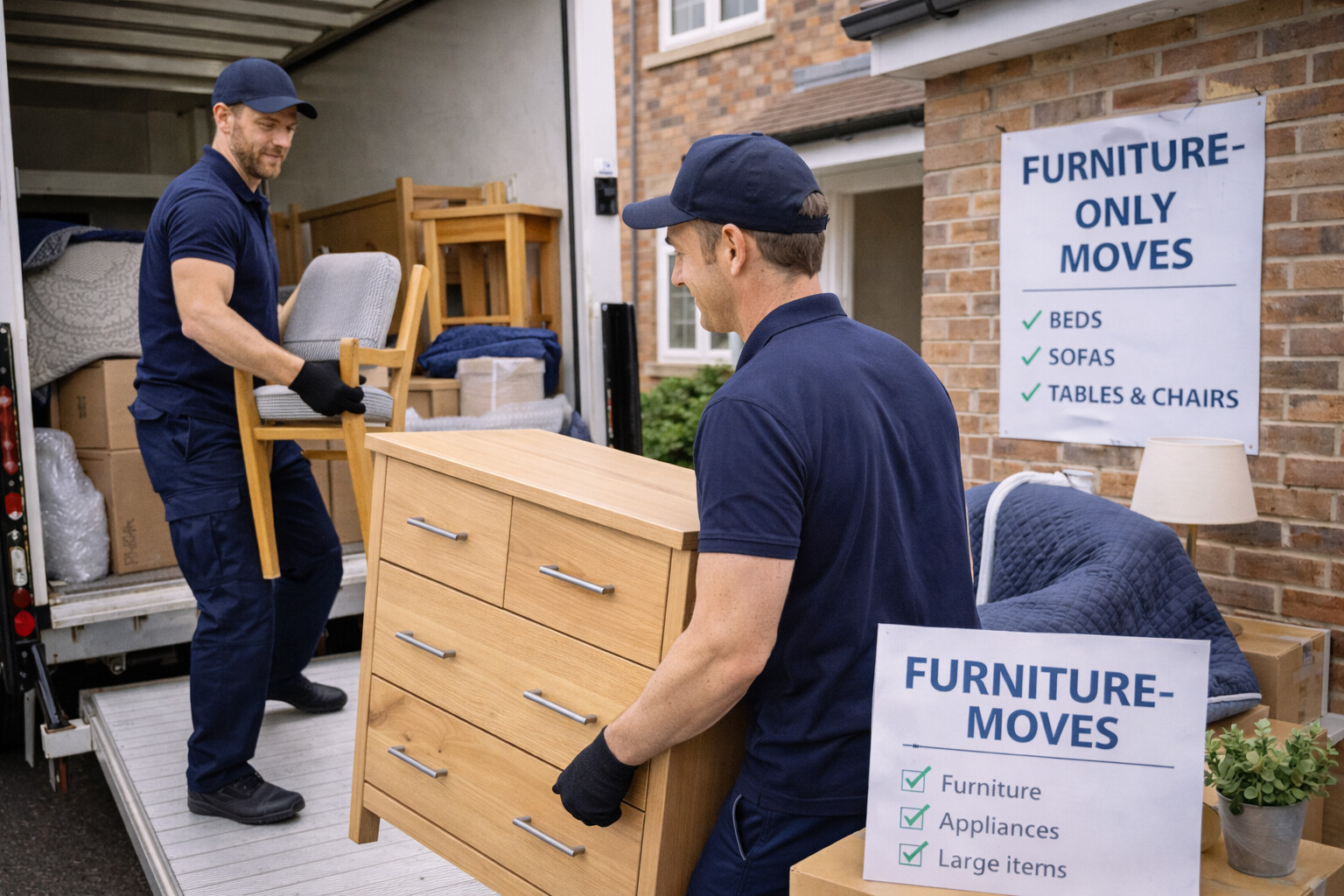
Furniture-only moves are one of the most misunderstood relocation types in the UK. Many people assume that if they are not moving boxes, clothes, or household items, the move will be simple and cheap. In reality, transporting furniture on its own often requires more planning, more precision, and more care than a full household move.
This guide explains what furniture-only moves really involve, why they are operationally different from standard removals, and how to plan them properly to avoid damage, delays, and unexpected costs.
You can explore all related guides here:
https://blog.xvan.uk/types-of-moves/
What Is a Furniture-Only Move?
A furniture-only move is a relocation where only large items are transported, without general household contents. This type of move commonly includes:
- Sofas and armchairs
- Beds and mattresses
- Wardrobes and drawers
- Dining tables and chairs
- Desks and office furniture
- White goods such as fridges or washing machines
There are no packed boxes of clothes, kitchenware, or personal items. However, this does not make the move simpler—it changes where the complexity lies.
Why Furniture-Only Moves Are Often More Complex Than Expected
The difficulty of furniture-only moves comes from item characteristics, not volume. Furniture is:
- Heavy
- Awkwardly shaped
- Prone to surface damage
- Often difficult to manoeuvre through doors and staircases
In a full house move, furniture is balanced by boxes that are easy to stack. In a furniture-only move, nearly every item requires careful handling, protection, and positioning.
Common Furniture-Only Move Scenarios in the UK
Furniture-only relocations happen in many situations, including:
People buying or selling furniture through online marketplaces.
Landlords furnishing or unfurnishing rental properties.
Tenants upgrading or replacing large items without moving home.
Couples merging households and removing surplus furniture.
Office clear-outs where desks and chairs are moved separately.
Temporary moves into storage during renovations.
These scenarios are frequent in cities, where people change furniture more often than they change addresses.
Typical Items and Their Challenges
Each furniture type introduces specific transport risks.
Sofas and Armchairs
Sofas are bulky and often flexible, which makes them difficult to grip securely. Fabric sofas can tear, while leather can scuff or crease if pressure is uneven.
Beds and Mattresses
Bed frames usually require disassembly. Mattresses must be kept clean, dry, and upright to avoid deformation or contamination.
Wardrobes and Drawers
Large wardrobes may not fit through doorways without partial dismantling. Drawers can slide open during transport if not secured.
Tables and Desks
Table legs are vulnerable to impact. Glass or stone tops require special handling and padding.
White Goods
Appliances are heavy and sensitive to tilting. Incorrect handling can cause internal damage, even if the exterior looks fine.
Access Issues: The Hidden Cost Driver
In furniture-only moves, access often matters more than distance.
Narrow hallways, tight staircases, small lifts, and restricted parking can significantly increase loading time. A single wardrobe in a third-floor flat without a lift can take longer to move than an entire studio’s worth of boxes.
Because furniture cannot be compressed or stacked freely, poor access has a disproportionate impact on cost and risk.
Measuring and Planning Before Booking
One of the most common mistakes is booking a move without measuring furniture and access points.
Before arranging a furniture-only move, it is essential to:
- Measure large items
- Check door widths and stair turns
- Confirm lift dimensions if applicable
- Identify parking distance from the entrance
Skipping this step leads to delays, forced dismantling on site, or even aborted moves.
Vehicle Size and Load Configuration
Furniture-only moves require careful vehicle selection.
A small van may appear sufficient based on item count, but furniture occupies space inefficiently. Large flat surfaces cannot be stacked like boxes, and items must be secured to prevent movement.
In many cases, a medium van is more suitable than a small van, even for a limited number of items. Choosing the correct vehicle reduces handling, protects items, and shortens the move.
Why Load Sequencing Matters
Unlike full household moves, furniture-only relocations depend heavily on load order.
Heavy, stable items should be loaded first and secured. Fragile or easily marked items should be placed last and isolated from pressure points. Incorrect sequencing increases the risk of damage, even on short journeys.
This is one reason why furniture-only moves benefit from experienced handling rather than casual transport.
Loading Help: When It Becomes Essential
Furniture-only moves are physically demanding. Even strong individuals struggle with:
- Awkward lifting angles
- Staircases
- Tight landings
Professional loading help reduces injury risk and protects both the furniture and the property. Trying to save money by self-loading often leads to damaged items or strained muscles, which cost more in the long run.
Packing and Protection for Furniture
Although there are no boxes, protection is still critical.
Furniture should be:
- Wrapped or padded
- Protected at corners and edges
- Secured against movement
Skipping protective materials is a common mistake, especially for short moves. Most furniture damage occurs during loading and unloading, not during transit.
Furniture-Only Moves and Storage
Furniture-only moves frequently involve storage, especially during:
- Renovations
- Property staging
- Temporary downsizing
In these cases, items must be protected for longer-term storage conditions, not just transport. Moisture protection and careful stacking become especially important.
Insurance Considerations
Furniture-only moves often involve high-value items. Goods-in-transit insurance is essential because:
- Furniture repairs are expensive
- Replacement can take weeks
- Cosmetic damage is common without cover
Relying on informal transport arrangements significantly increases risk.
Cost Structure of Furniture-Only Moves
Costs are driven less by distance and more by:
- Time required to handle items
- Access difficulty
- Vehicle suitability
- Level of protection needed
Furniture-only moves are often charged by time rather than item count, reflecting the labour-intensive nature of the work.
Why Traditional Removal Models Often Don’t Fit
Many full removals companies are structured around complete household moves. For furniture-only jobs, they may:
- Enforce high minimum charges
- Use oversized vehicles
- Lack flexibility for partial loads
At the other extreme, informal couriers may lack the skills or equipment to handle furniture safely.
Furniture-only moves sit between these two extremes and require a balanced approach.
How Xvan Supports Furniture-Only Moves
Xvan is well suited to furniture-only relocations because it allows customers to book the right vehicle size, add professional loading help when required, and transport single items or full furniture sets without paying for unnecessary full-house services.
👉 Main site: https://xvan.uk
👉 Book via the Xvan platform
A Practical Furniture-Only Move Example
Consider a common scenario: moving a sofa, bed frame, mattress, and wardrobe from a second-floor flat to a ground-floor house within the same city.
Although the distance is short, the move involves:
- Disassembling the bed
- Navigating stairs with large items
- Protecting furniture surfaces
- Careful load sequencing
Without planning, this can easily exceed time expectations and cause damage. With proper handling, it can be completed efficiently and safely.
Common Mistakes in Furniture-Only Moves
The most frequent errors include underestimating access difficulty, booking vans that are too small, skipping protective materials, attempting to self-load heavy items, and assuming short distance equals low risk.
These mistakes usually result in damage or delays rather than savings.
Furniture-Only Moves in the Types of Moves Framework
Furniture-only relocations are a specialised category that sits between single-item transport and full household moves. They require careful handling, correct vehicle choice, and realistic time planning.
For a complete overview of relocation types, visit:
👉 https://blog.xvan.uk/types-of-moves/