

Packing fragile items is one of the biggest concerns when moving house in the UK. Glassware, electronics, mirrors, artwork, and delicate furniture can easily be damaged if they are not packed correctly. With the right method and proper materials, most damage can be avoided.
You can explore all related guides here:
https://blog.xvan.uk/moving-guides/
Identify Fragile Items Before Packing
Before packing begins, it is important to identify which items require special care. Glass items, ceramics, lamps, mirrors, electronics, and small appliances are all considered fragile.
These items should never be packed loosely or mixed with heavy objects in the same box, as this greatly increases the risk of damage during transport.
Use Proper Packing Materials
Using the correct packing materials makes a significant difference in protecting fragile items. Strong cardboard boxes are essential, especially double-walled boxes for heavier or more delicate belongings.
Recommended Packing Materials
- Bubble wrap or packing paper
- Strong boxes in small to medium sizes
- Tape and protective padding
Newspapers should be avoided, as they offer limited protection and can transfer ink onto items.
Wrap Each Item Individually
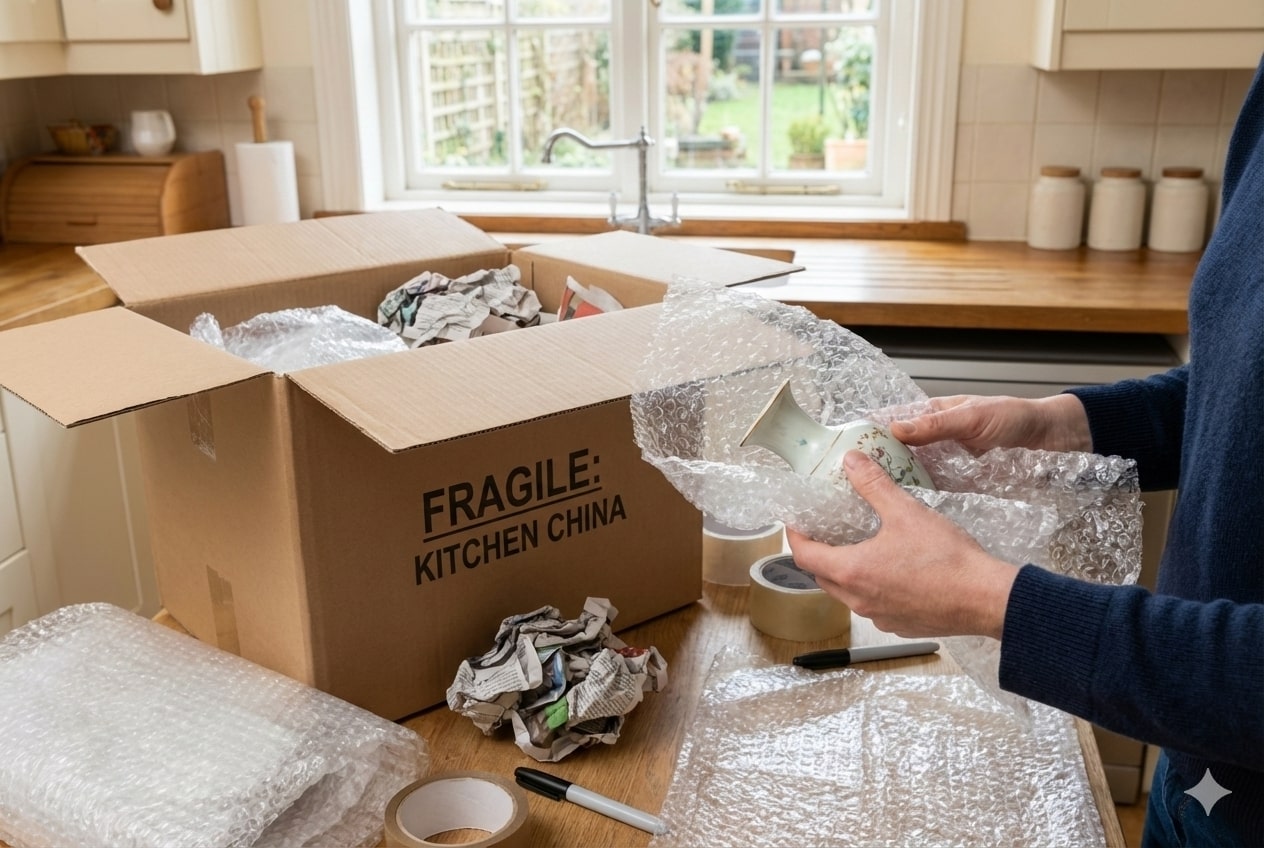
Every fragile item should be wrapped separately. Plates should be packed vertically rather than stacked flat, as this reduces pressure. Glasses and cups should be fully wrapped, with extra padding placed inside hollow spaces.
Electronics are best packed in their original boxes whenever possible. If original packaging is not available, use firm padding on all sides to prevent movement.
Avoid Overloading Boxes
Boxes containing fragile items should never be overloaded. Heavy boxes are more difficult to carry and are more likely to be dropped.
It is better to use several lighter boxes than one heavy box. Any empty space inside the box should be filled to prevent items from shifting during transit.
Label Fragile Boxes Clearly
Clear labelling is essential when packing delicate belongings. Every box containing fragile items should be clearly marked as fragile.
This helps ensure careful handling during loading and unloading and makes unpacking easier and more organised at the new property.
Protect Furniture and Large Fragile Items
Furniture with glass elements or delicate surfaces should be protected using furniture covers or thick blankets. Corners and edges are particularly vulnerable and should be padded carefully.
If furniture can be disassembled, removing glass shelves or panels and packing them separately is often the safest option.
Load Fragile Items Correctly on Moving Day
On moving day, fragile boxes should be loaded last and secured properly inside the van. They should never be placed underneath heavy furniture or stacked in unstable positions.
Extremely valuable or sentimental items are best transported personally when possible.
Packing fragile items properly requires time and attention, but it is far less costly than replacing damaged belongings. With careful preparation and organised packing, fragile items can arrive at your new home safely and in perfect condition.