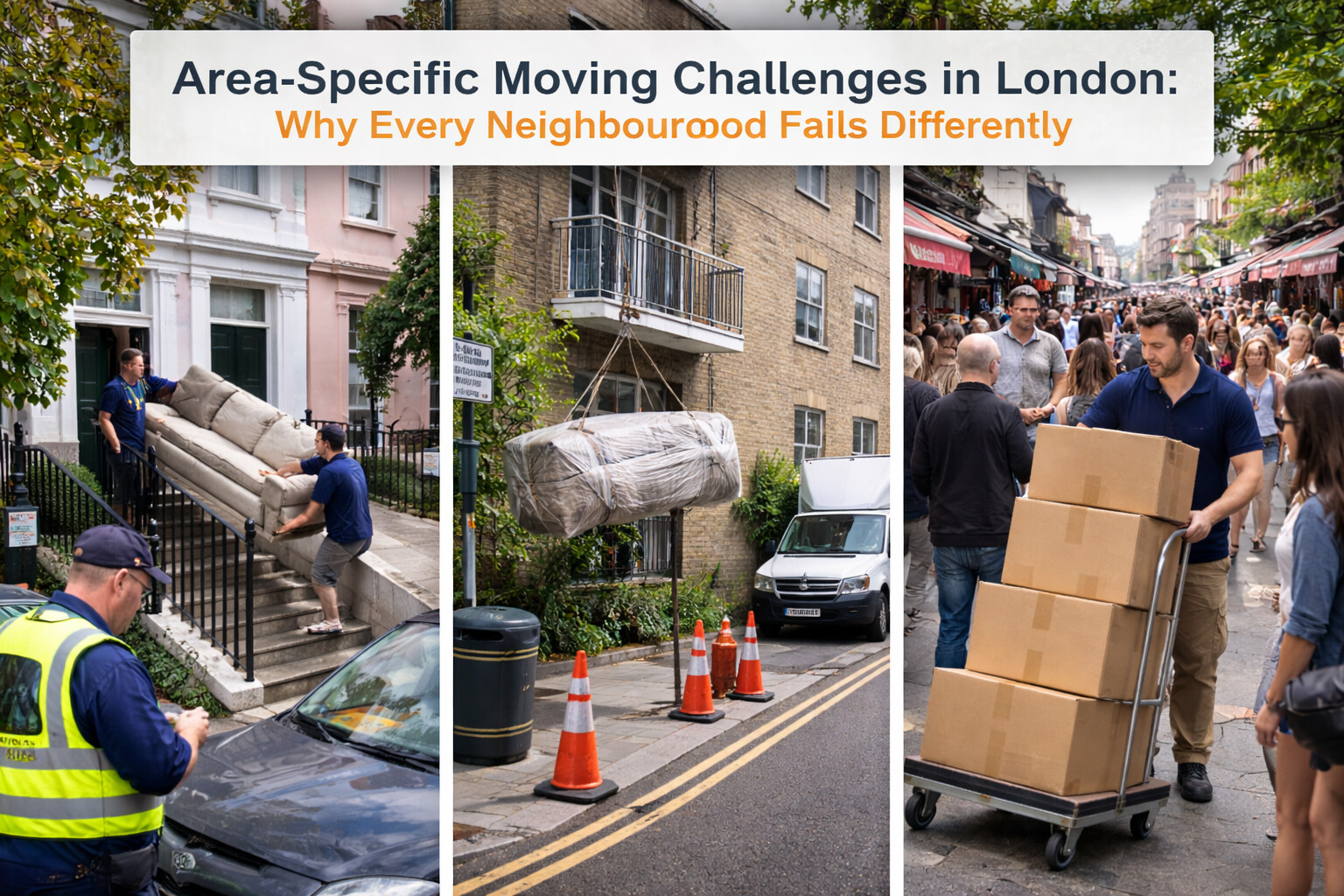


Moving in London is often described as one experience, but in reality there are two completely different moving environments operating side by side: Inner London and Outer London.
Understanding which side your move falls on is one of the most important decisions you can make when planning a relocation in the capital.
Many failed or over-budget moves happen not because of distance or item volume, but because people plan an Inner London move like an Outer London one — or the other way around. This guide explains how and why these two environments behave differently, what that means in real terms, and how to plan correctly for each.
For the full collection of area-based guides, visit the pillar page:
https://blog.xvan.uk/areas-location-guides/
What Counts as Inner vs Outer London (From a Moving Perspective)
From an administrative point of view, London is divided into boroughs. From a moving and logistics perspective, the more meaningful divide is Inner vs Outer London.
Inner London (Typical Characteristics)
- Higher density housing
- Shorter distances but longer move times
- Strict parking and loading controls
- High enforcement presence
- Smaller living spaces
- Greater reliance on flats and apartments
Outer London (Typical Characteristics)
- Lower density
- Longer distances but faster loading
- More houses and family homes
- Easier parking access
- Larger item volumes
- More flexible timing
This divide affects every stage of a move.
Distance vs Time: The Core Difference
One of the most misunderstood aspects of London moves is the relationship between distance and time.
In Inner London
- A move across the same street can take hours
- Carry distance and vertical movement dominate
- Parking issues slow everything down
- Waiting time is common
In Outer London
- Longer driving distances are normal
- Loading and unloading are faster
- Carry distance is often short
- Moves feel more predictable
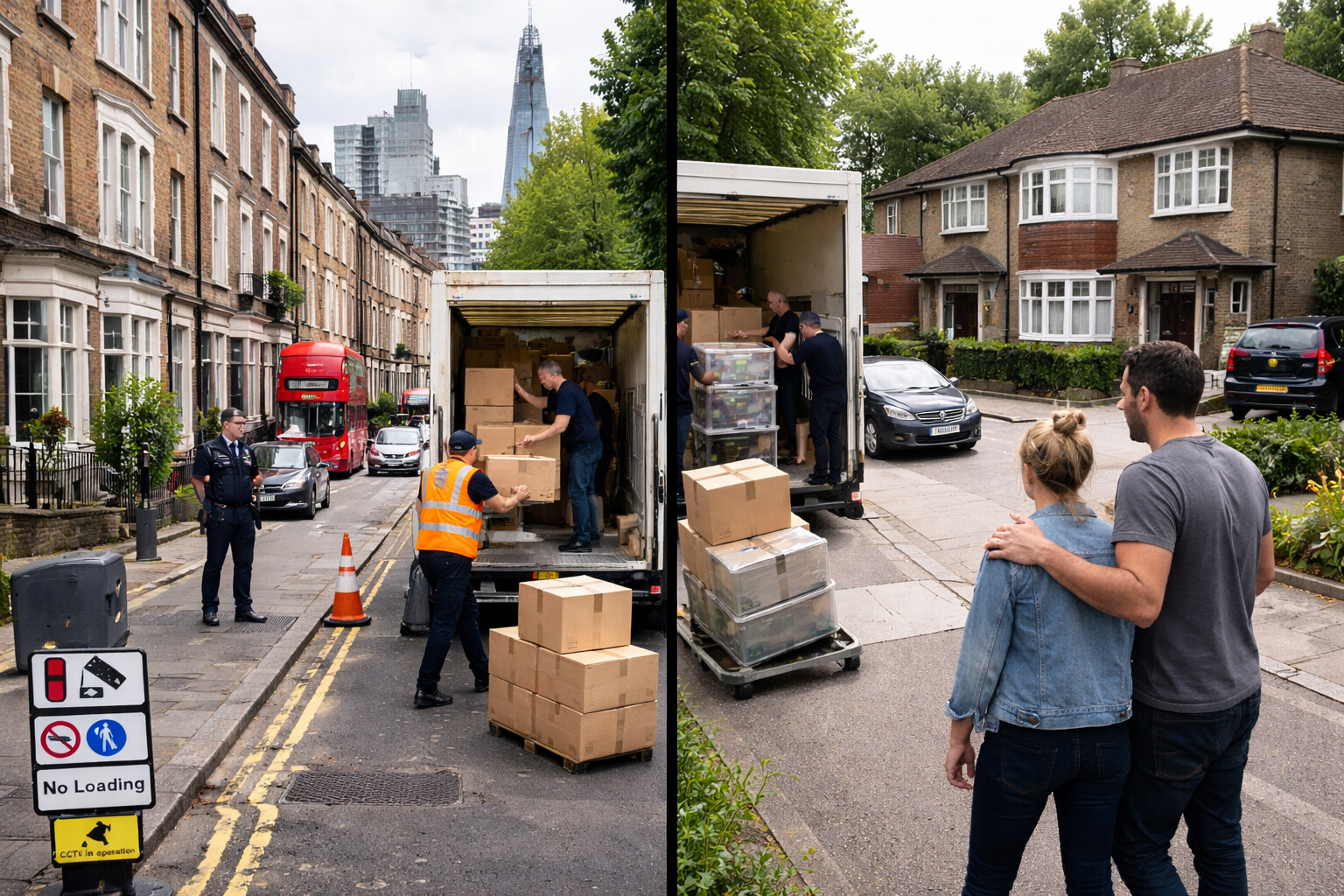
In practice, Inner London moves are time-heavy, while Outer London moves are volume-heavy.
Parking and Access: Where the Divide Is Clearest
Inner London Parking Reality
- Controlled Parking Zones are the norm
- Loading windows are short
- Parking suspensions are often essential
- Enforcement is fast and strict
A legal parking spot may be:
- Far from the property
- Available only for limited time
- Shared with multiple buildings
Outer London Parking Reality
- More residential streets
- Higher chance of legal parking close to the property
- Driveways and dropped kerbs are more common
- Enforcement varies significantly
Parking planning is mandatory in Inner London and often optional but helpful in Outer London.
Housing Types and Their Impact
Inner London Housing Patterns
- Converted flats
- Purpose-built apartment blocks
- High-rise developments
- Mixed-use buildings
Implications:
- Lift access becomes critical
- Staircases are narrow
- Communal rules apply
- Vertical movement adds major time cost
Outer London Housing Patterns
- Semi-detached and detached houses
- Bungalows and townhouses
- Fewer communal access rules
Implications:
- Larger item volumes
- Faster per-item movement
- More furniture and appliances
A “small flat” move in Inner London can take longer than a “large house” move in Outer London.
Enforcement and Risk Profile
Inner London
- Parking enforcement is proactive
- Cameras are common
- “Just five minutes” assumptions fail
- Multiple fines per move are possible
Outer London
- Enforcement is more variable
- Some areas are lightly monitored
- Informal loading is sometimes tolerated
This difference alone explains why Inner London moves require precision, while Outer London moves allow more flexibility.
Cost Structure: How Pricing Behaves Differently
| Cost Driver | Inner London | Outer London |
|---|---|---|
| Time | High | Moderate |
| Distance | Low | Higher |
| Labour | High (waiting, stairs) | High (volume) |
| Parking Fees | Common | Less common |
| Risk of Fines | High | Lower |
Inner London costs escalate through time overruns.
Outer London costs escalate through volume and distance.
Planning Priorities: What Matters Most
Inner London Planning Priorities
- Parking legality and access
- Building rules and lift bookings
- Timing and enforcement windows
- Carry distance and stairs
- Flexibility in service structure
Outer London Planning Priorities
- Correct van size
- Accurate volume assessment
- Efficient loading strategy
- Route planning for longer drives
- Labour allocation
Using the wrong priority list is one of the most common planning errors.
Common Mistakes People Make
Inner London Mistakes
- Ignoring parking rules
- Underestimating stairs and lifts
- Booking rigid time slots
- Choosing vans based on volume only
Outer London Mistakes
- Underestimating total item volume
- Booking vans too small
- Assuming distance is cheap
- Not planning loading order
These mistakes are environment-specific.
Mixed Moves: Inner to Outer (and Vice Versa)
Many London moves cross the Inner–Outer divide.
Inner → Outer Moves
- Difficult loading, easy unloading
- Time-heavy start, volume-heavy end
Outer → Inner Moves
- Easy loading, difficult unloading
- Parking and access become critical at destination
The destination often matters more than the starting point.
How to Choose the Right Approach
Ask yourself:
- Where is the tightest access point?
- Which location has stricter rules?
- Where is enforcement more aggressive?
Plan your move around the most restrictive location, not the easiest one.
Using Xvan for Inner and Outer London Moves
The Xvan app is designed to adapt to both Inner and Outer London realities, instead of assuming a one-size-fits-all move.
With Xvan, you can:
- Choose services based on location type
- Adjust help levels for stairs, lifts, or volume
- Avoid overpaying for unnecessary capacity
- Plan flexibly around access and timing
Download Xvan (UK):
https://xvan.uk
Xvan lets you plan based on how your move actually works, not averages.
Frequently Asked Questions
Are Inner London moves always more expensive?
Not always, but they are more sensitive to delays and planning errors.
Are Outer London moves simpler?
Generally yes, but larger volumes can still create challenges.
Which matters more: distance or location type?
Location type usually matters more than distance within London.
Can a small move still be difficult?
Yes. In Inner London, access often matters more than item count.
Final Summary
Inner London and Outer London are two different moving worlds. Treating them as the same leads to delays, fines, stress, and inflated costs. Successful moves come from recognising which environment you are in and planning accordingly.
If you plan based on location reality instead of assumptions, most London moving problems disappear before they start.
For more detailed area-based guides, visit the pillar page:
https://blog.xvan.uk/areas-location-guides/