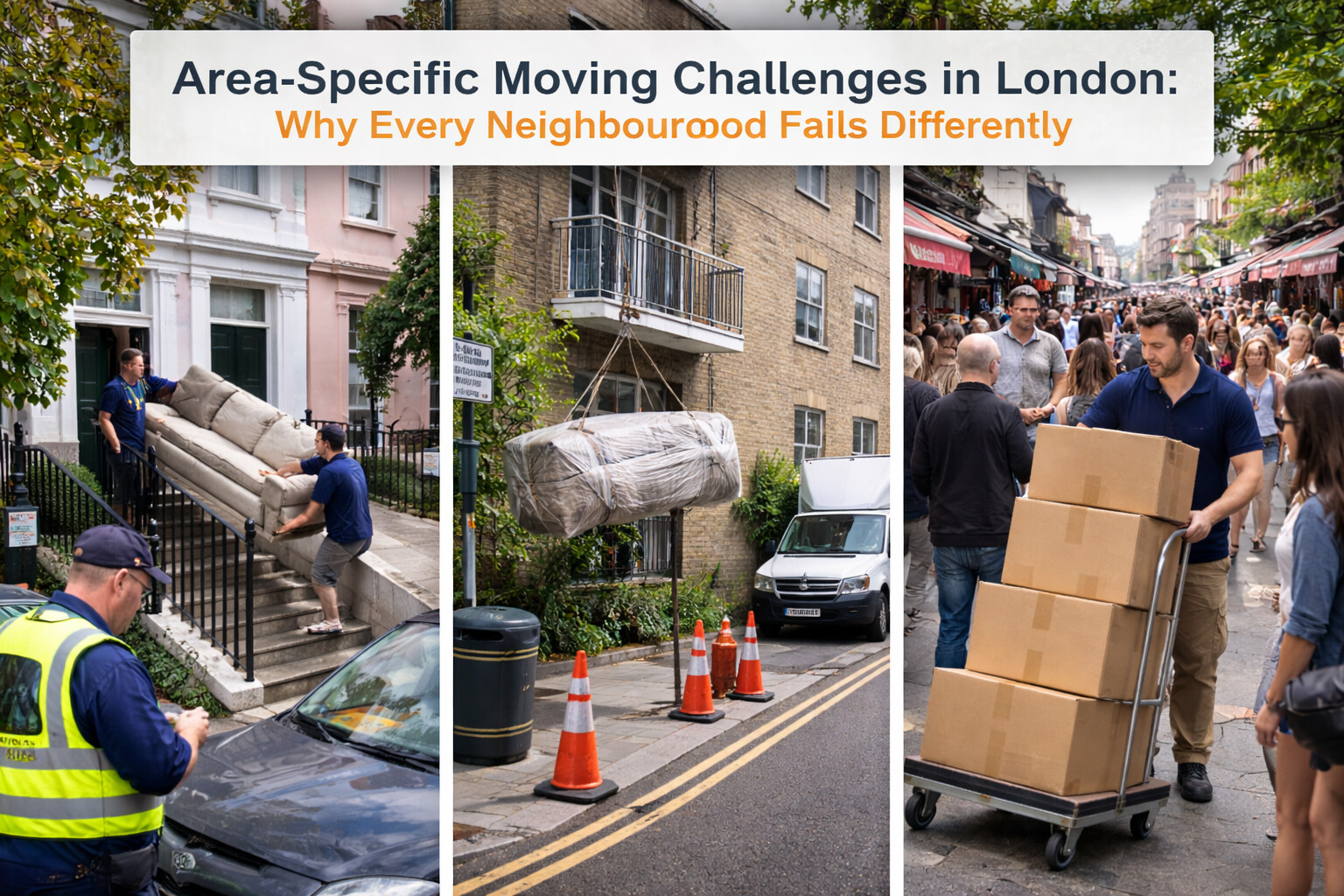


Moving in East London is shaped by contrast. Few areas in the UK combine extreme density, rapid regeneration, old housing stock, new high-rise developments, strict parking enforcement, and constant construction activity in the way East London does.
This means East London moves are rarely “standard”. Two moves on the same street can have completely different outcomes depending on building type, access rules, parking enforcement, and time of day.
This guide explains how moving in East London really works, where people consistently misjudge it, and how to plan properly based on current on-the-ground reality, not outdated assumptions.
For the full set of location-based guides, see the pillar page:
https://blog.xvan.uk/areas-location-guides/
What Counts as East London From a Moving Perspective?
East London typically includes boroughs such as:
- Tower Hamlets
- Newham
- Hackney
- Waltham Forest
- Barking and Dagenham
- Redbridge (western parts)
From a logistics standpoint, East London is defined by:
- High residential turnover
- Large numbers of renters
- Ongoing regeneration projects
- A high concentration of flats and apartment blocks
This combination creates constant moving activity, but also constant friction.
Density: The Core Challenge in East London
Density in East London is not just about population. It affects:
- Parking availability
- Lift access
- Loading bay competition
- Enforcement frequency
- Noise and time restrictions
In many East London streets:
- Legal parking is already saturated
- Loading bays are shared by multiple buildings
- Vans compete with delivery vehicles all day
As density increases, planning becomes more important than manpower.
Regeneration Areas: Old Streets, New Problems
One of the defining features of East London is regeneration.
Common regeneration-related challenges:
- New high-rise buildings on old road networks
- Temporary road layouts
- Ongoing construction vehicles blocking access
- Changing parking rules
In regenerated areas, Google Maps accuracy is often poor for loading access. Relying on it alone is a common and costly mistake.
High-Rise Living and Vertical Moves
East London has one of the highest concentrations of:
- High-rise residential blocks
- New-build apartment complexes
- Mixed-use developments
Practical implications:
- Lift booking systems are common
- Lift downtime is frequent
- Concierge approval is often required
- Loading is restricted to short time slots
Vertical movement — not distance — becomes the biggest time cost.
Parking Enforcement in East London
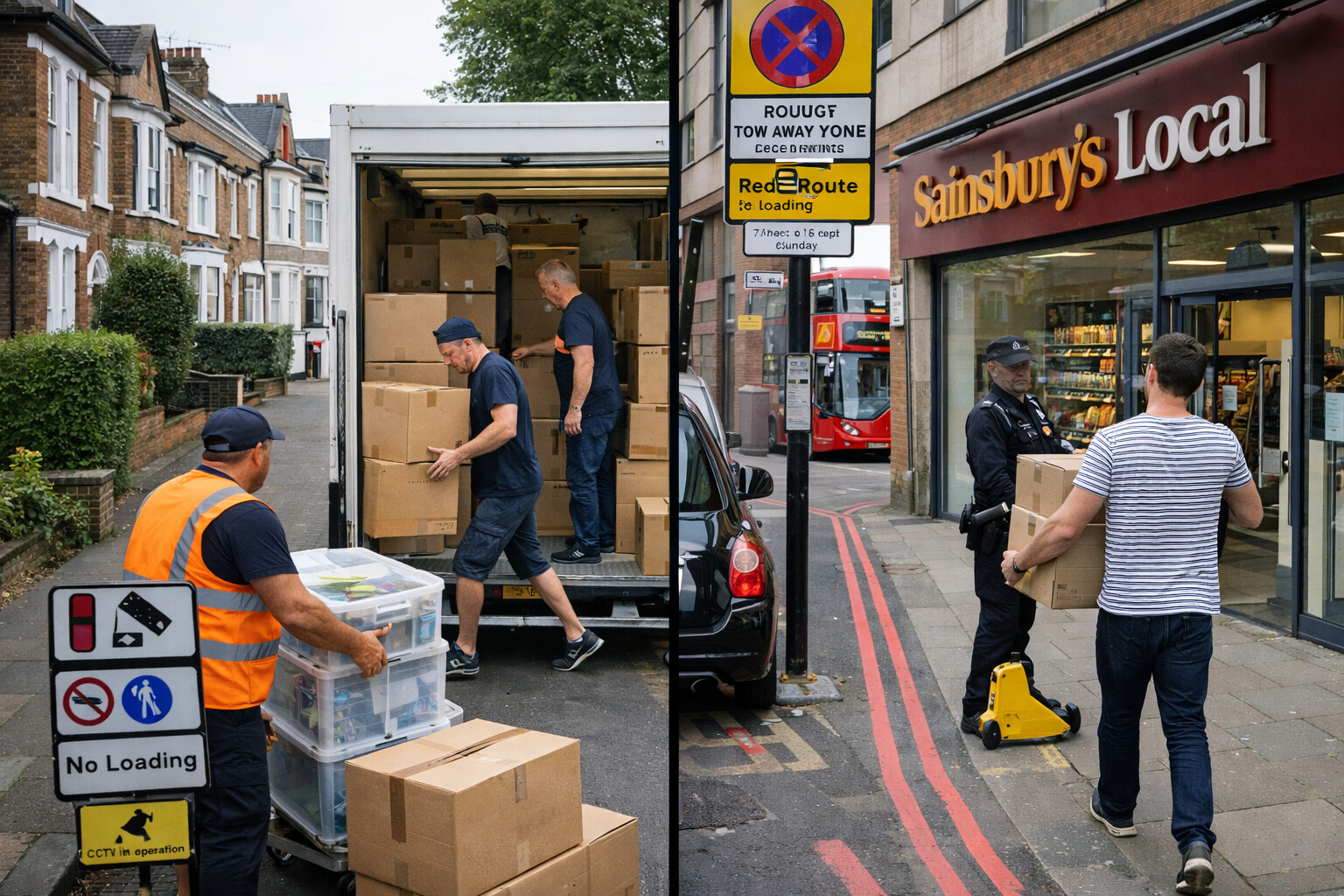
East London boroughs are known for consistent and visible parking enforcement.
Typical characteristics:
- Frequent patrols
- Camera enforcement on main roads
- Strict interpretation of loading rules
- Limited tolerance for “quick stops”
Parking fines remain a regular outcome for poorly planned moves, even in residential-looking streets.
Housing Stock: Old Meets New
East London contains extremes.
Older Housing Stock
- Narrow staircases
- Limited internal space
- Poor access planning
- Long carries
New Developments
- Better internal access
- Strict external rules
- Limited loading windows
- High enforcement risk
Both can be difficult — just in different ways.
East London and Short-Distance Moves
East London sees a very high number of:
- Same-area moves
- Flat-to-flat relocations
- Short-notice moves
Ironically, short distance does not mean simple:
- Access rules stay the same
- Parking issues double (two locations)
- Lift bookings are still required
Many East London moves fail because people underestimate “small” relocations.
Traffic Patterns Unique to East London
East London traffic is shaped by:
- Major arterial roads
- River crossings
- Construction diversions
- Event-based congestion
Traffic flow can change dramatically by time of day, making rigid time slots risky.
Cost Drivers Specific to East London
Based on moving industry data and patterns:
- Lift wait time adds significant labour cost
- Carry distance increases quickly due to parking scarcity
- Vertical moves slow loading speed dramatically
- Enforcement fines are a recurring hidden cost
In East London, time overruns are far more common than mileage overruns.
Common Mistakes People Make in East London
- Assuming new buildings are “easy”
- Ignoring lift booking requirements
- Underestimating enforcement
- Treating short moves as low-risk
- Relying on maps instead of site checks
Almost all East London moving issues are predictable.
How to Plan an East London Move Properly
A realistic East London plan includes:
- Confirming building access rules early
- Booking lifts where required
- Checking street-level enforcement, not postcode-level
- Allowing buffer time for vertical movement
- Choosing flexible services over fixed packages
East London rewards precision and flexibility, not speed.
Using Xvan for East London Moves
The Xvan app is built specifically for high-density, access-sensitive moves like those common in East London.
With Xvan, you can:
- Match services to building and street reality
- Choose help based on vertical load, not assumptions
- Avoid overbooking or underbooking
- Adapt plans when access conditions change
Download Xvan (UK):
https://xvan.uk
Xvan works with real-world East London conditions, not idealised ones.
Frequently Asked Questions
Is East London harder to move in than other areas?
Often yes, due to density, enforcement, and vertical living.
Are new developments easier to move in?
Internally yes, externally often no.
Do short-distance moves help reduce difficulty?
Not significantly. Access and restrictions remain the same.
Is enforcement really that strict?
Yes. Especially around main roads and regeneration zones.
Final Summary
East London is one of the most logistically demanding moving environments in the UK. Density, regeneration, high-rise living, and strict enforcement combine to create challenges that are easy to underestimate and expensive to ignore.
Successful East London moves depend on planning around access, timing, and building rules, not distance or optimism.
For more detailed area-based guides, visit the pillar page:
https://blog.xvan.uk/areas-location-guides/