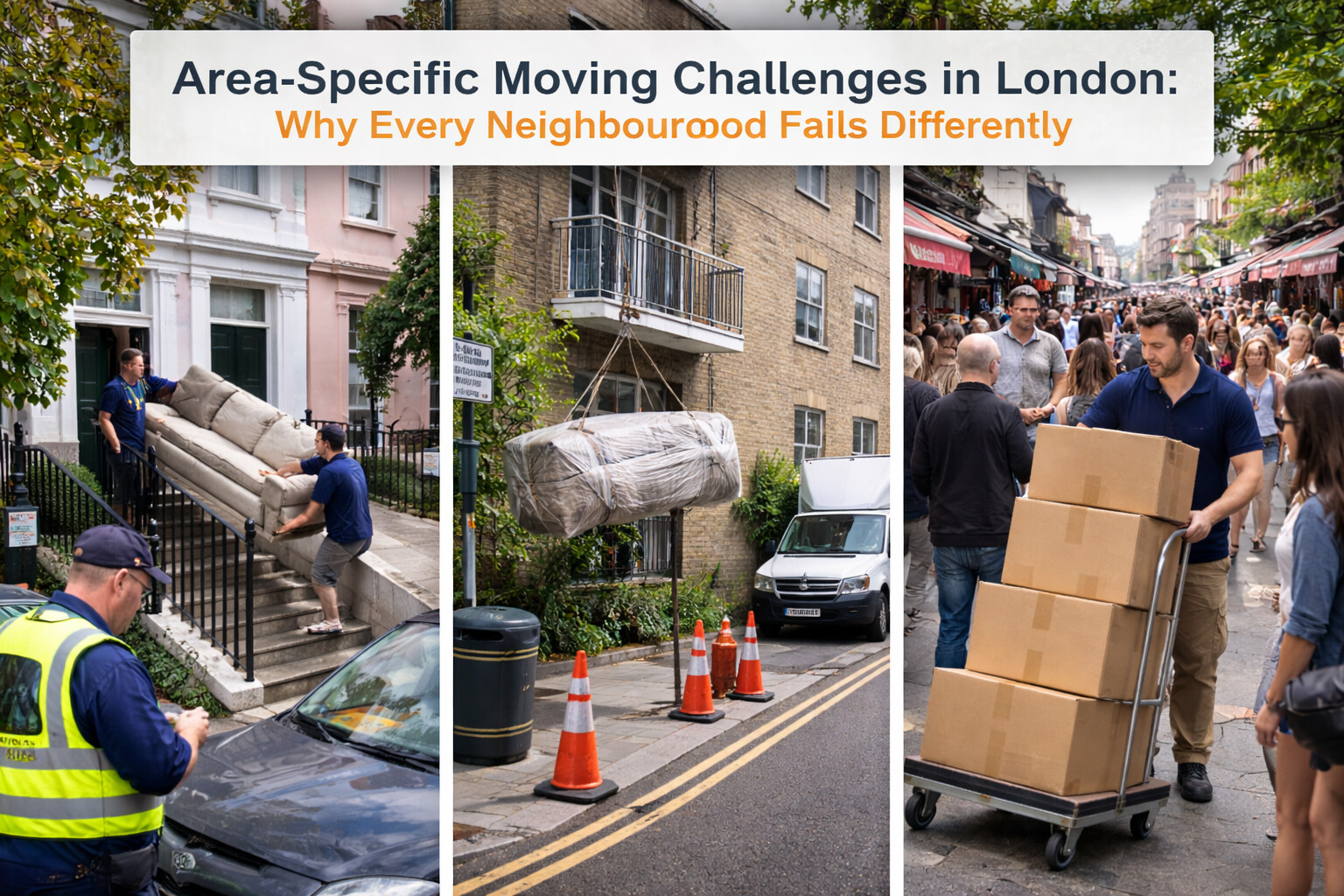



Moving in narrow streets and historic areas of London is where modern moving assumptions most often fail. These locations were designed long before vans, parking rules, and modern logistics existed. As a result, access constraints, legal restrictions, and physical limitations dominate every decision.
This guide explains how moves in narrow and historic London streets actually work, why even experienced movers get caught out, and how to plan properly when space, tolerance, and flexibility are extremely limited.
For the full collection of location-based guides, visit the pillar page:
https://blog.xvan.uk/areas-location-guides/
What Counts as a Narrow or Historic Area?
From a moving perspective, these areas are defined less by age and more by street behaviour. They typically include:
- Pre-war and Victorian street layouts
- Conservation areas
- Streets never designed for two-way traffic
- Areas with physical width constraints
- Locations with architectural protection
Common characteristics:
- Single-lane roads
- Tight turning circles
- No legal stopping points
- Active enforcement
- High resident sensitivity
These streets appear residential and calm but are logistically hostile.
Why Narrow Streets Change Everything
On a standard street, you plan:
- Van size
- Time
- Labour
On a narrow or historic street, you must plan:
- Whether a van can physically enter
- Where it can legally stop
- How long it can remain
- How neighbours and enforcement will react
One wrong assumption can block the entire street and halt the move.
Physical Constraints: When Size Becomes the Enemy
Narrow streets impose hard physical limits:
- Vans cannot pass parked cars
- Turning around may be impossible
- Reversing long distances is unsafe or illegal
- Larger vans may be completely unusable
This forces compromises:
- Smaller vans → more trips
- Remote parking → long carries
- Tight timing → higher stress
In these areas, bigger is often worse, not better.
Parking and Loading: Minimal Tolerance Environment
Historic and narrow streets often have:
- No marked loading bays
- Resident-only parking
- Zero tolerance for obstruction
- Immediate complaints from neighbours
Consequences include:
- Rapid warden response
- Police involvement in extreme cases
- Forced vehicle relocation mid-load
Even legally parked vans can be challenged if they restrict access.
Enforcement Behaviour in Historic Areas
Councils prioritise these areas because:
- Streets are fragile
- Disruption affects many residents
- Emergency access must be protected
Typical enforcement traits:
- Fast response times
- Strict interpretation of rules
- Little discretion for loading exceptions
Camera enforcement is common at entry points and junctions.
Building Access in Historic Locations
Historic areas often include:
- Listed buildings
- Converted properties
- Irregular internal layouts
Common access challenges:
- Narrow doorways
- Steep or spiral staircases
- Low ceilings
- Uneven floors
Modern furniture often does not fit easily, increasing handling time and risk.
Noise Sensitivity and Time Pressure
Historic and conservation areas tend to be:
- Quiet residential zones
- Heavily owner-occupied
- Highly sensitive to disturbance
Moves that:
- Start early
- Run late
- Block the street
are more likely to trigger complaints, which escalate enforcement.
Distance vs Feasibility
In narrow streets:
- Distance becomes irrelevant
- Feasibility becomes the real constraint
A move of 50 metres can be harder than a move of 5 miles if:
- Parking is impossible
- Carry distance is extreme
- Access is contested
Planning must focus on whether the move can happen, not how fast.
Cost Patterns in Narrow & Historic Areas
| Cost Driver | Impact |
|---|---|
| Van size limitation | High |
| Carry distance | Very high |
| Time overruns | Common |
| Parking fines | High risk |
| Neighbour complaints | Frequent |
Costs escalate due to inefficiency, not labour rates.
Common Mistakes People Make
- Assuming “small street = quiet = easy”
- Bringing oversized vans
- Ignoring resident sensitivity
- Not scouting access beforehand
- Booking tight, inflexible slots
These mistakes are especially costly in historic zones.
How to Plan a Move in Narrow or Historic Streets
A realistic approach includes:
- Physically visiting the street in advance
- Measuring street width and turning space
- Checking legal stopping options
- Choosing van size conservatively
- Allowing extra time for manual handling
In these areas, pre-visit planning is not optional.
When Timing Matters Most
Avoid:
- Peak commuter hours
- School run times
- Weekend midday periods
Early morning or mid-day weekday slots often reduce conflict — but only if legally permitted.
Using Xvan for Narrow & Historic Area Moves
The Xvan app is designed to support access-constrained and high-risk environments, including narrow and historic streets.
With Xvan, you can:
- Match van size to physical reality
- Plan labour around long carries
- Avoid unsuitable vehicles
- Reduce risk of mid-move failure
Download Xvan (UK):
https://xvan.uk
Xvan focuses on feasibility first, not assumptions.
Frequently Asked Questions
Are narrow street moves always harder?
Almost always, due to access and enforcement.
Can I use a large van if I’m careful?
Often no. Physical width and turning limits apply.
Do councils allow exceptions?
Rarely. Safety and access take priority.
Is pre-visiting the street really necessary?
Yes. Many failures happen because people don’t.
Final Summary
Narrow streets and historic areas expose the limits of modern moving assumptions. Physical constraints, enforcement pressure, resident sensitivity, and architectural realities combine to make these moves unforgiving of poor planning.
Successful moves depend on feasibility checks, conservative choices, and buffer time — not speed or optimism.
For more detailed location-based guides, visit:
https://blog.xvan.uk/areas-location-guides/