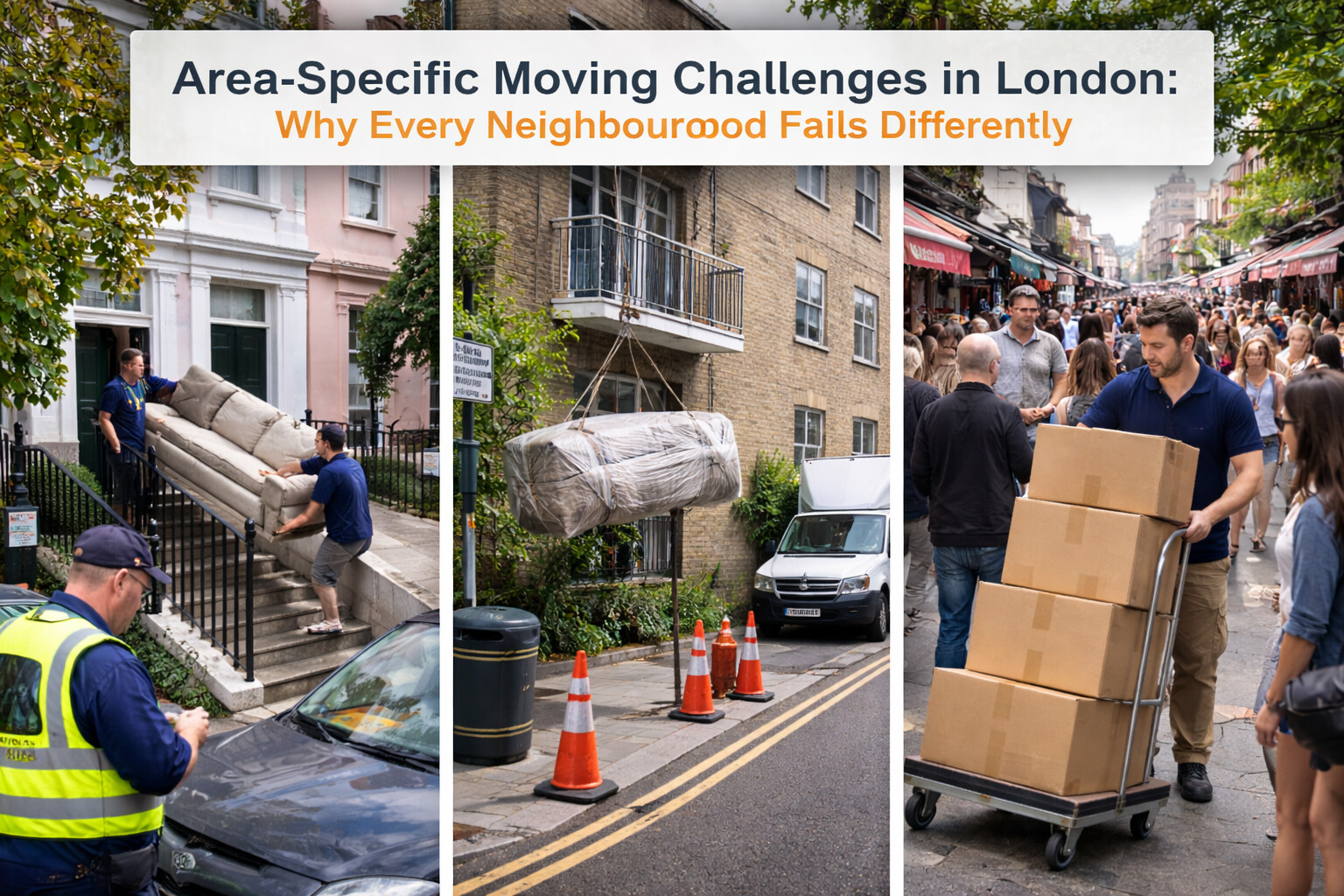



Moving in North London sits somewhere between the extremes of Central London restrictions and the relative simplicity of many Outer London suburbs. What makes North London challenging is variety. Within a short distance, you can move from wide residential streets to steep hills, dense Victorian terraces, conservation zones, and high-demand residential pockets with strict parking control.
This guide breaks down how moving in North London actually works, which areas are easier or harder, what people consistently underestimate, and how to plan a move that fits the reality of this part of London rather than relying on generic assumptions.
For a full overview of all location-based guides, see the pillar page:
https://blog.xvan.uk/areas-location-guides/
What Is Considered North London?
North London generally covers boroughs located north of the River Thames. From a moving and logistics perspective, the most relevant boroughs include:
- Camden
- Islington
- Haringey
- Enfield
- Barnet
- Hackney (northern sections)
North London is not uniform. It includes:
- High-density inner areas close to Central London
- Suburban zones with family housing
- Hills, narrow roads, and mixed-use streets
- Strong parking enforcement in specific pockets
Because of this mix, North London moves often fail when people assume it behaves like either Central or Outer London. It behaves like both, depending on the street.
Street Layouts: One of the Biggest Variables
Street design in North London directly affects:
- Van size selection
- Parking distance
- Loading speed
- Labour requirements
Common street types include:
- Narrow Victorian terraces with cars parked on both sides
- One-way residential streets
- Steep or sloped roads (especially in hilly areas)
- Mixed residential–commercial streets
In many locations, even legally parked vans can block traffic, increasing enforcement risk and stress during loading.
Parking Rules and Enforcement Reality
North London boroughs are known for actively enforced Controlled Parking Zones (CPZs).
Key points:
- Many streets allow loading only for short windows
- Parking signs vary street by street
- Suspension requirements differ by borough
- Enforcement officers are common in residential zones
A frequent mistake is checking parking rules for the postcode, not the exact street. In North London, that distinction matters.
Housing Types and Their Impact on Moves
North London contains a wide mix of housing stock, including:
Victorian and Edwardian Conversions
- Multiple floors
- Narrow staircases
- No lifts
- Long carry distances
Purpose-Built Flats
- Lift access (often shared and time-restricted)
- Building management approval required
- Loading rules enforced internally
Suburban Family Homes
- Easier access
- Driveways or nearby parking
- Faster loading but often larger volume
Each housing type changes:
- Time per item
- Number of helpers needed
- Van size efficiency
Assuming “flat = easy” or “house = hard” is often wrong in North London.
Hills, Gradients, and Physical Load
North London has noticeably more uneven terrain than many other parts of the city.
Why this matters:
- Longer carry times uphill
- Increased physical strain
- Slower loading rates
- Higher fatigue risk
This is especially relevant for:
- Heavy furniture
- Appliances
- Long-distance carries from legal parking spots
These factors rarely show up in quotes but directly affect move duration.
Inner vs Outer North London: Key Differences
| Factor | Inner North London | Outer North London |
|---|---|---|
| Density | High | Moderate |
| Parking | Restricted | More flexible |
| Street Width | Narrow | Wider |
| Enforcement | Strict | Variable |
| Typical Move Time | Longer | Shorter |
Moves in inner parts of North London often resemble Central London moves, while outer parts behave more like suburban relocations.
Cost Implications Specific to North London
Based on moving industry averages and local patterns:
- Poor access can increase move time by 25–50%
- Carry distance is a major hidden cost driver
- Waiting time for lifts or access adds labour hours
- Parking fines remain a frequent risk
In North London, planning quality has more impact on cost than distance.
Common Mistakes People Make in North London
- Underestimating street restrictions
- Choosing van size without considering access
- Ignoring hills and carry distance
- Assuming borough rules are consistent
- Not coordinating with building management
Most problems are preventable with correct area awareness.
How to Plan a North London Move Properly
A realistic plan should include:
- Checking street-level parking rules
- Assessing real carry distance, not ideal distance
- Confirming building access rules early
- Allowing buffer time for traffic and enforcement
- Choosing flexible services instead of rigid packages
North London rewards preparation, not speed.
Using Xvan for North London Moves
The Xvan app is built for location-aware moving, which is critical in North London.
With Xvan, you can:
- Match man and van services to street and access reality
- Choose loading help based on building type
- Avoid overpaying for unnecessary options
- Plan moves that fit your area, not generic assumptions
Download Xvan (UK):
https://xvan.uk
Xvan adapts to where you are moving, not just what you are moving.
Frequently Asked Questions
Is North London easier to move in than Central London?
Generally yes, but inner parts of North London can be just as restrictive.
Do I need a parking suspension in North London?
In many streets, yes — especially in dense residential areas.
Are suburban parts of North London simple to move in?
They are usually easier, but volume and access still matter.
Does hilliness really affect move time?
Yes. Slopes and carry distance significantly slow loading and unloading.
Final Summary
North London is one of the most variable moving environments in the UK. The same service that works perfectly on one street can fail completely a few roads away. Understanding street layout, parking enforcement, housing type, and terrain is essential.
Plan based on street-level reality, not assumptions.
For more location-specific guides, visit the full pillar page:
https://blog.xvan.uk/areas-location-guides/