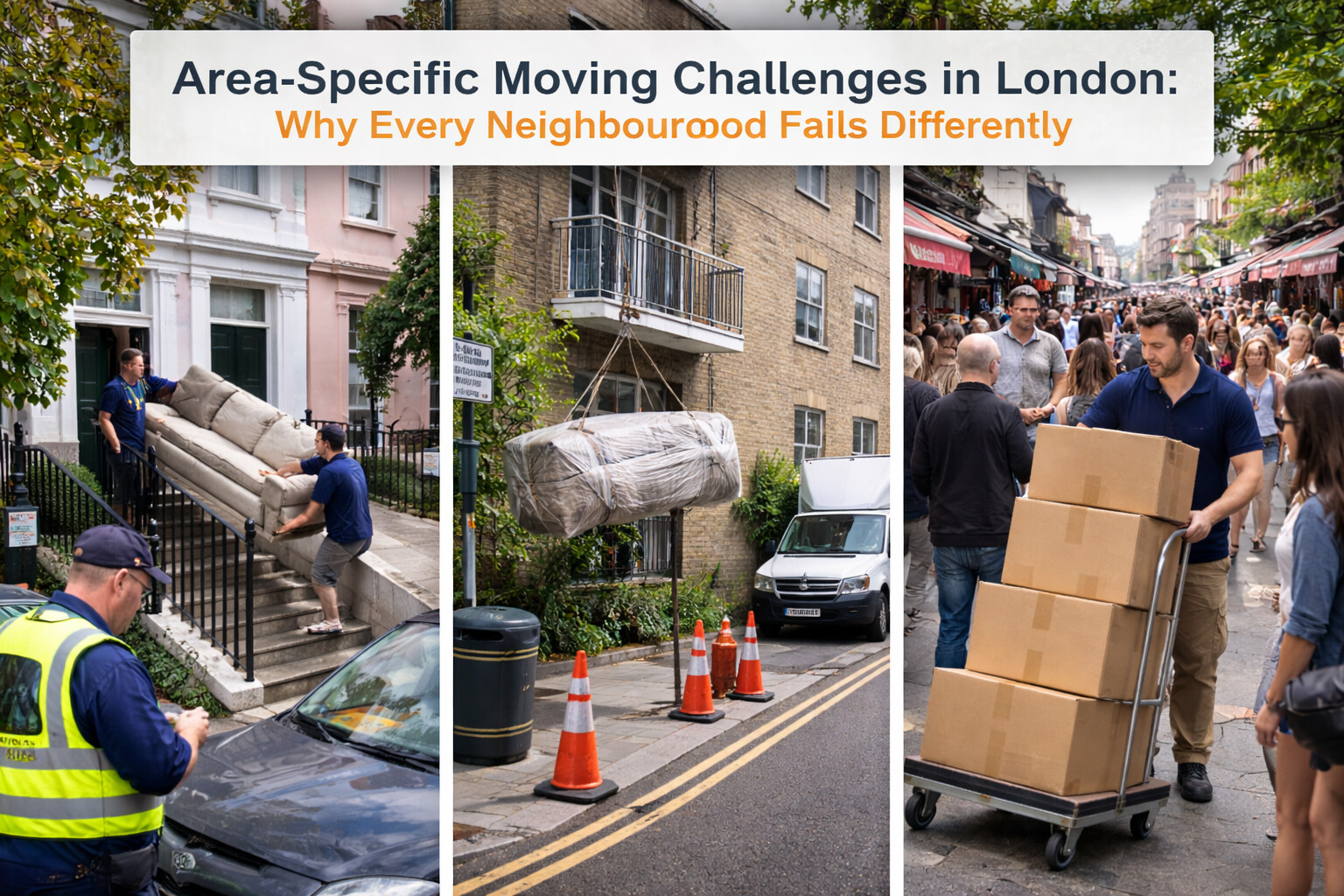



Moving near major transport hubs in London is one of the most misjudged relocation scenarios. People assume that good transport links make moving easier. In reality, proximity to stations, interchanges, and terminals creates continuous congestion, strict enforcement, and severe timing sensitivity.
This guide explains how moves near transport hubs actually behave, why they fail more often than expected, and how to plan properly when your move happens in areas designed for flow, not stopping.
For the full collection of area-based guides, visit the pillar page:
https://blog.xvan.uk/areas-location-guides/
What Counts as a Major Transport Hub?
From a moving perspective, transport hubs include areas around:
- Mainline rail stations
- Underground and Overground interchanges
- Bus terminals
- Park-and-ride facilities
- Airport-linked rail corridors
These locations share common traits:
- Constant vehicle movement
- Heavy pedestrian traffic
- Strict stopping controls
- Camera enforcement
- Zero tolerance for obstruction
Transport hubs are designed to keep things moving, not to accommodate loading activity.
Why Transport Hubs Are Logistically Hostile
Transport hub areas combine multiple pressure points:
- High traffic flow
- Delivery vehicles
- Taxis and ride-hailing services
- Pedestrian safety controls
- Enforcement priority
A moving van in these zones is:
- Highly visible
- Highly restricted
- Actively discouraged
What works on nearby residential streets often fails completely one block closer to a hub.
Red Routes, Bus Lanes & No-Stopping Zones
Transport hubs are typically surrounded by:
- Red routes
- Bus-only corridors
- Taxi ranks
- No-stopping or no-waiting zones
Key realities:
- Loading exemptions are narrow
- Signage is dense and specific
- Camera enforcement is constant
Stopping legally for loading often requires exact positioning and precise timing.
Pedestrian Density: The Overlooked Risk
High foot traffic affects moves by:
- Slowing loading speed
- Triggering safety concerns
- Attracting complaints
- Increasing enforcement response
In busy periods, pedestrian flow alone can reduce loading efficiency by 30–50%, regardless of item volume.
Timing Sensitivity Near Transport Hubs
Transport hub areas have predictable but unforgiving peaks:
- Morning commuter rush
- Evening outbound rush
- Weekend travel peaks
- Event-driven surges
During these periods:
- Loading becomes impractical or illegal
- Enforcement presence increases
- Delays cascade instantly
Moves that ignore hub timing patterns almost always overrun.
Residential Buildings Near Hubs: A False Sense of Ease
Many residential properties near hubs are:
- New-build apartments
- High-density developments
- Short-term rentals
Internally, these buildings may be modern and efficient. Externally, they are:
- Hard to access
- Surrounded by restrictions
- Time-window dependent
Internal convenience does not compensate for external constraints.
Parking Reality Near Transport Hubs
Common parking challenges include:
- No on-street parking
- Resident-only zones with no visitor access
- Loading bays shared with multiple buildings
- Short loading windows
As a result:
- Carry distances increase
- Labour time increases
- Stress levels increase
Parking planning is the single biggest determinant of success near hubs.
Enforcement Behaviour Around Hubs
Transport hub zones are:
- High-priority enforcement areas
- Heavily monitored
- Complaint-sensitive
Consequences include:
- Rapid ticket issuance
- Little discretion
- Forced vehicle relocation mid-load
Moves fail fast here — there is rarely a grace period.
Distance Becomes Irrelevant
Near transport hubs:
- A move of 100 metres can be harder than one of 5 miles
- Carry distance dominates time
- Timing dominates feasibility
Planning must focus on whether loading is possible, not how far items travel.
Cost Patterns in Transport Hub Areas
| Cost Driver | Impact |
|---|---|
| Enforcement risk | Very high |
| Carry distance | High |
| Waiting time | Common |
| Timing overruns | Frequent |
| Fine exposure | High |
Unexpected costs near hubs come from access failure, not labour rates.
Common Mistakes People Make
- Assuming “good transport = easy move”
- Ignoring red route signage
- Scheduling moves during peak hours
- Underestimating pedestrian impact
- Relying on sat-nav instead of signage
These mistakes are predictable and repeatable.
How to Plan a Move Near a Transport Hub Properly
A realistic plan includes:
- Identifying the exact proximity to the hub
- Checking street-level stopping legality
- Avoiding commuter and event peaks
- Allowing buffer time for enforcement risk
- Choosing flexible services over rigid slots
Near hubs, precision replaces flexibility.
When to Avoid Moving Near Transport Hubs
If possible, avoid:
- Weekday mornings
- Weekday evenings
- Event days
- Public transport disruption days
Midday weekday windows are often the least risky — but still require checks.
Using Xvan for Transport-Hub Moves
The Xvan app is designed to support high-enforcement, access-sensitive environments such as transport hub areas.
With Xvan, you can:
- Match services to access reality
- Avoid unsuitable vehicles
- Plan around timing and restrictions
- Reduce fine and delay risk
Download Xvan (UK):
https://xvan.uk
Xvan works with how transport hubs actually operate, not assumptions.
Frequently Asked Questions
Are moves near stations always difficult?
Almost always, due to stopping and enforcement rules.
Can I load quickly and leave?
Usually no. Enforcement is immediate.
Are weekends easier?
Sometimes, but events and leisure travel still create congestion.
Does internal building access help?
Only marginally. External access dominates.
Final Summary
Moving near major transport hubs in London is defined by congestion, enforcement, and timing traps. These areas are optimised for movement, not loading, and they punish casual planning quickly.
Successful moves depend on precise timing, strict legality, and conservative planning. If you plan around how transport hubs actually function not how convenient they seem these moves become manageable instead of chaotic.