


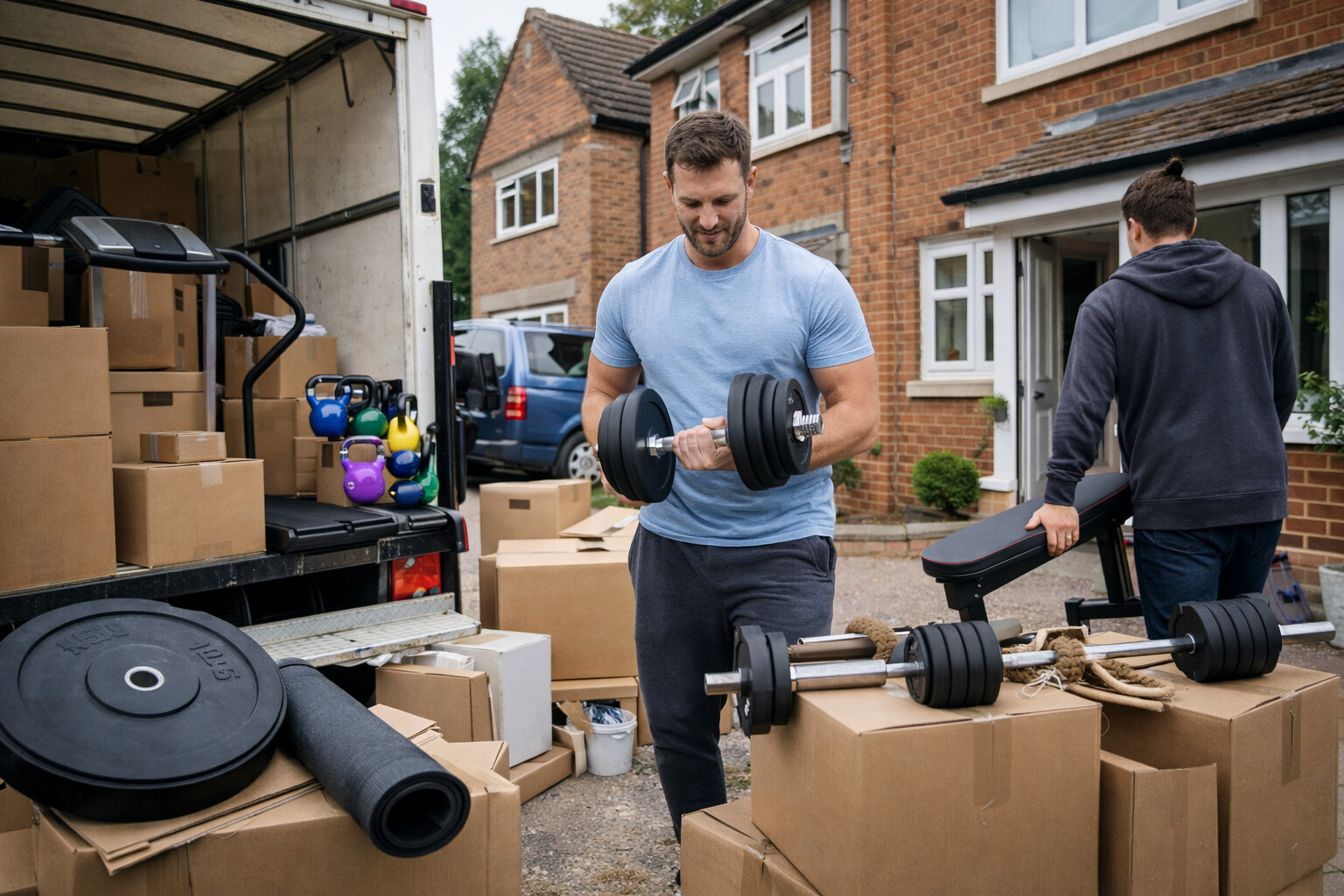
Moving with home gym equipment is one of the most physically and technically demanding types of relocation in the UK. Unlike standard furniture or household items, gym equipment combines extreme weight, awkward dimensions, mechanical parts, and safety risks. A single mistake during handling can damage expensive equipment, cause injury, or render machines unusable.
This guide explains how home gym moves work in practice, what makes them different from other relocations, and how to move gym equipment safely, efficiently, and without unnecessary cost.
You can explore all related guides here:
https://blog.xvan.uk/types-of-moves/
What Counts as Home Gym Equipment?
Home gym moves typically involve one or more of the following items:
- Treadmills
- Exercise bikes and spin bikes
- Rowing machines
- Multi-gym stations
- Power racks and squat racks
- Weight benches
- Free weights (plates, dumbbells, kettlebells)
- Cable machines
- Rubber flooring and mats
These items differ radically in both handling method and risk profile from ordinary household contents.
Why Home Gym Moves Are So Different
The core challenge of moving gym equipment is concentrated weight.
A sofa may be bulky, but its weight is spread out.
A treadmill or power rack concentrates mass into dense components that are difficult to grip, tilt, or stabilise.
In addition:
- Many machines contain moving parts
- Frames can twist if lifted incorrectly
- Weight plates amplify injury risk
- Floors and stairs are highly vulnerable
This makes gym equipment one of the highest-risk categories in domestic moves.
Typical Home Gym Move Scenarios
Home gym relocations commonly occur when:
- People move house and want to keep fitness routines intact
- Spare rooms or garages are converted into gyms
- Renovations require temporary equipment removal
- Gym setups are moved into storage
- Equipment is sold or relocated between properties
In many cases, gym equipment is moved separately from the rest of the household.
Weight Reality: Why Estimation Is Dangerous
Many people underestimate gym equipment weight.
Examples:
- Treadmills: 120–200 kg
- Power racks: 80–150 kg
- Multi-gyms: 150 kg+
- Olympic plates: 20–25 kg each (often dozens of them)
Unlike furniture, these items cannot be “balanced out” with lighter items. Weight dominates every decision.
Access Challenges Multiply With Gym Equipment
Home gyms are often located in:
- Garages
- Basements
- Upper-floor spare rooms
- Garden outbuildings
Each location introduces unique challenges:
- Steps without handrails
- Narrow doors
- Low ceilings
- Uneven ground
- Long carry distances
What looks manageable on paper often becomes the biggest bottleneck on moving day.
Disassembly: When It’s Essential
Most gym equipment must be partially or fully dismantled before moving.
Disassembly is often required for:
- Doorway clearance
- Weight reduction
- Protecting mechanical components
However, disassembly itself carries risks:
- Losing bolts or fixings
- Misaligning frames
- Incorrect reassembly
Photographing each stage and keeping fixings labelled is critical.
Free Weights: The Hidden Time Sink
Free weights are deceptively simple but often cause major delays.
Problems include:
- Extremely high combined weight
- Slow handling speed
- Floor damage risk
- Manual fatigue
A box of books is inconvenient.
A box of weight plates is dangerous.
Weights should be packed in small, reinforced containers and moved in controlled batches.
Vehicle Size and Load Strategy
Home gym moves often require:
- Medium or large vans
- High payload capacity
- Secure strapping points
Even a “small” gym setup can exceed safe payload limits if packed inefficiently.
Load sequencing matters:
- Heavy items loaded first
- Weight evenly distributed
- Moving parts immobilised
Incorrect loading can destabilise vehicles and damage equipment.
Floor and Property Protection
Gym equipment is unforgiving to floors, walls, and door frames.
Risks include:
- Cracked tiles
- Dented wooden floors
- Stair damage
- Wall impacts
Protective materials and careful routing are essential, especially in rented properties where damage affects deposits.
Safety Risks and Injury Prevention
Home gym moves carry a higher injury risk than almost any other domestic relocation.
Common injuries include:
- Back strain
- Crushed fingers
- Slips on stairs
- Dropped components
Attempting to self-move heavy gym equipment is one of the leading causes of move-related injuries.
Storage and Home Gym Equipment
Gym equipment often goes into storage during:
- Renovations
- Temporary downsizing
- Property transitions
In storage:
- Moisture control matters
- Rust risk increases
- Rubber components degrade if compressed
Correct storage positioning and ventilation are important for long-term equipment health.
Reassembly and Calibration
After transport, many gym machines require:
- Careful reassembly
- Alignment checks
- Tension calibration
- Safety testing
Skipping this step can result in:
- Noisy operation
- Premature wear
- Unsafe use
Reassembly should never be rushed immediately after unloading.
Insurance and Liability
Home gym equipment is:
- Expensive
- Difficult to repair
- Often uninsured under standard household contents
Goods-in-transit insurance is essential because:
- Damage is often structural
- Replacement costs are high
- Manufacturer warranties may not apply after moves
Uninsured gym moves represent significant financial risk.
Cost Structure of Home Gym Moves
Costs are driven by:
- Weight and handling difficulty
- Disassembly and reassembly time
- Access constraints
- Crew requirements
Distance is usually secondary. A short move with a heavy treadmill can cost more than a longer furniture move.
When It May Be Better Not to Move Gym Equipment
In some cases, moving gym equipment is not the optimal choice.
Consider alternatives when:
- Equipment is outdated or unreliable
- New space is unsuitable
- Reassembly costs exceed value
- Replacement is cheaper than transport
Evaluating this honestly before moving day avoids wasted effort.
Why Generic Removal Services Often Fail
Many removals services are not equipped or trained for gym equipment. Common issues include:
- Underestimating weight
- Inadequate strapping
- Rushed handling
- Poor disassembly practices
Gym moves require special handling mindset, not just manpower.
How Xvan Supports Home Gym Moves
Xvan supports home gym relocations by offering flexible vehicle options, experienced handling for heavy items, and scalable bookings suitable for complex, weight-intensive moves—without forcing full-house removals when only specialist equipment is involved.
👉 Main site: https://xvan.uk
👉 Book via the Xvan platform
A Realistic Home Gym Move Example
Consider moving a treadmill, power rack, bench, and 200 kg of plates from a garage to a new house. Without disassembly and proper sequencing, the move becomes unsafe and chaotic. With controlled dismantling, correct packing of weights, and balanced loading, the same move can be completed safely and efficiently.
The difference lies entirely in preparation and handling—not distance.
Common Mistakes in Home Gym Moves
The most frequent errors include underestimating weight, attempting to move equipment intact, packing weights in large boxes, skipping protection, and trying to self-move heavy machines.
These mistakes usually lead to injury or damaged equipment.
Home Gym Moves in the Types of Moves Framework
Home gym relocations sit at the extreme end of weight-intensive domestic moves. They intersect with furniture-only moves, storage relocations, and renovation logistics, and they demand planning, strength, and technical care.
For a full overview of relocation types, visit:
👉 https://blog.xvan.uk/types-of-moves/