


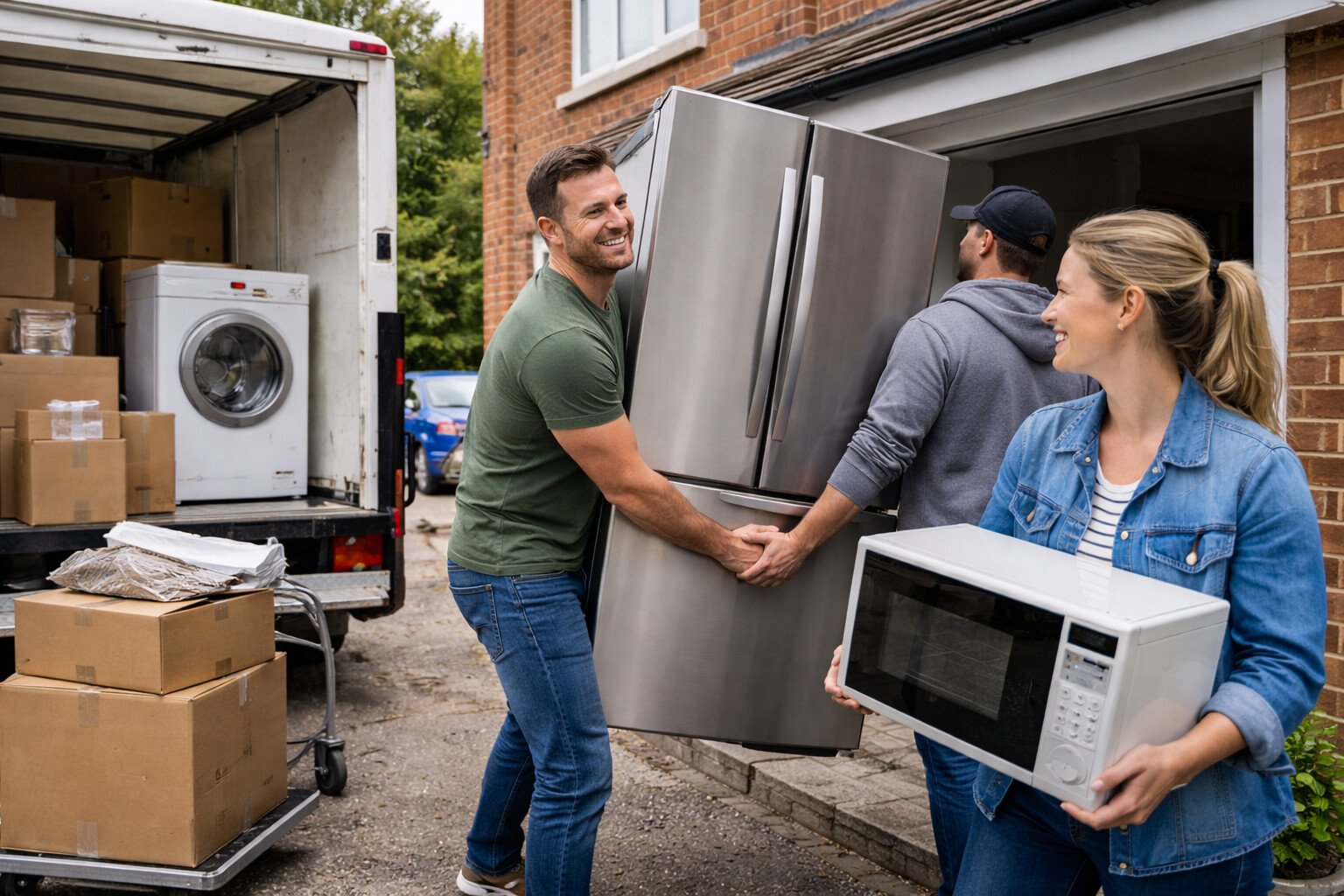
Moving with large appliances is one of the most technically sensitive relocation scenarios in the UK. Unlike furniture or boxes, appliances combine weight, mechanical complexity, electrical connections, water systems, and strict handling requirements. A mistake that looks minor on moving day can lead to permanent damage, voided warranties, or costly repairs later.
This guide explains how moving large appliances works in practice, why it differs from other move types, and how to transport appliances safely, legally, and cost-effectively.
You can explore all related guides here:
https://blog.xvan.uk/types-of-moves/
What Counts as a Large Appliance Move?
Large appliance moves involve transporting household appliances that are heavy, fixed, or mechanically sensitive. Common examples include:
- Fridges and freezers
- Washing machines and tumble dryers
- Dishwashers
- Cookers and ovens
- American-style fridge freezers
- Wine coolers
- Integrated appliances
These items are not just bulky; they are systems, and improper handling affects internal components even if the exterior looks undamaged.
Why Appliance Moves Are Different From Furniture Moves
The key difference is functional risk.
With furniture:
- Damage is often cosmetic
- Repairs may be optional
With appliances:
- Internal damage may not be visible
- Faults may appear days later
- Repairs are often expensive
- Safety issues may arise
An appliance that arrives “looking fine” can still be unusable if moved incorrectly.
Typical Scenarios Where Appliance Moves Occur
Large appliance transport is common in:
- End-of-tenancy moves
- Home purchases and sales
- Furniture-only or single-item moves
- Renovations and refurbishments
- Storage relocations
- Appliance replacement or resale
In many cases, appliances are moved separately from household contents, increasing handling concentration and risk.
Weight and Handling Reality
Most large appliances weigh far more than people expect:
- Washing machines: 60–80 kg
- Fridge freezers: 70–120 kg
- American fridge freezers: 120 kg+
Their weight distribution is uneven, making them harder to control on stairs, through doorways, and during loading.
Attempting to move these items without proper handling is one of the most common causes of injury during home moves.
Appliance Preparation Before the Move
Preparation is critical and often overlooked.
Fridges and Freezers
These must be:
- Fully defrosted
- Cleaned and dried
- Transported upright where possible
Failure to defrost properly can lead to leaks, odours, and electrical issues.
Washing Machines
Washing machines require:
- Drum securing bolts
- Hoses drained and disconnected
Moving a washing machine without securing the drum can cause internal damage that is not immediately visible.
Dishwashers
Dishwashers should be:
- Drained completely
- Disconnected carefully
- Secured to prevent door movement
Cookers and Ovens
Gas appliances may require certified disconnection and reconnection. Moving them without proper disconnection can be unsafe and illegal.
Integrated Appliances: A Hidden Complication
Integrated appliances (built into cabinetry) add another layer of complexity.
Issues include:
- Cabinet disassembly
- Risk of damage to surrounding units
- Fixings lost during removal
- Reinstallation difficulties
Removing integrated appliances often takes longer than moving freestanding ones and should not be rushed.
Access Constraints and Their Impact
Large appliances magnify access problems.
Common issues include:
- Narrow doorways
- Tight staircases
- Sharp turns
- Lift size and weight limits
- Long carry distances
An appliance that fits through a door on paper may not fit in practice due to angles and clearance.
Vehicle Choice and Load Positioning
Appliances require:
- Adequate headroom
- Upright positioning (where possible)
- Secure strapping
They should never be:
- Laid flat unless manufacturer-approved
- Placed under heavy items
- Left unsecured
Choosing the wrong vehicle or poor load sequencing is a leading cause of appliance damage.
Protection During Transport
Unlike furniture, appliances require structural protection, not just surface padding.
Key considerations:
- Protect control panels
- Secure doors
- Prevent internal movement
- Avoid pressure on corners and edges
Superficial wrapping is not enough for heavy appliances.
Storage and Appliance Moves
Appliances often go into storage during:
- Renovations
- Property transitions
- Phased moves
In storage:
- Moisture control matters
- Upright positioning is critical
- Power-off periods affect seals and compressors
Long-term storage increases the need for correct preparation.
Insurance and Liability Considerations
Appliances represent a high financial risk.
Goods-in-transit insurance is essential because:
- Appliance repairs are costly
- Faults may appear after delivery
- Manufacturer warranties may not cover move damage
Relying on informal transport significantly increases exposure.
Cost Structure of Appliance Moves
Costs are driven by:
- Handling time
- Access difficulty
- Vehicle suitability
- Number of people required
Distance is often less important than manual handling complexity.
Trying to save money by reducing help or vehicle size often leads to higher costs later.
When Appliances Should Not Be Moved
In some cases, moving an appliance is not the best option.
Common reasons include:
- Old or unreliable appliances
- Integrated units incompatible with new kitchens
- High reconnection costs
- Risk exceeding replacement value
Assessing this before the move avoids unnecessary expense.
Why Appliance Moves Fail Most Often
The most common failure points include:
- Skipping preparation steps
- Incorrect lifting techniques
- Ignoring manufacturer guidance
- Underestimating access difficulty
- Treating appliances like furniture
These errors usually result in non-functional appliances rather than visible damage.
Why Flexible, Skilled Handling Matters
Large appliance moves are not about speed. They are about:
- Control
- Stability
- Sequencing
Rigid, rushed removals models perform poorly in this context.
How Xvan Supports Large Appliance Moves
Xvan supports large appliance relocations by offering appropriate vehicle options, experienced handling support, and flexible booking configurations suited to heavy, sensitive items—without forcing customers into full-house removals when only appliances are involved.
👉 Main site: https://xvan.uk
👉 Book via the Xvan platform
A Realistic Appliance Move Scenario
Consider moving a washing machine and fridge freezer from a second-floor flat to a house. Without drum bolts or proper securing, the washing machine may arrive damaged internally. With correct preparation, upright transport, and careful handling, both appliances arrive functional and ready for reconnection.
The difference lies entirely in preparation and handling, not distance.
Common Mistakes in Appliance Moves
The most frequent errors include failing to defrost appliances, moving washing machines without securing drums, booking insufficient help, ignoring access constraints, and assuming short distance equals low risk.
These mistakes usually appear days later—when appliances fail.
Moving With Large Appliances in the Types of Moves Framework
Appliance relocations cut across many move types: end-of-tenancy, furniture-only, storage moves, and renovations. Their success depends less on logistics and more on technical discipline.
For a full overview of relocation types, visit:
👉 https://blog.xvan.uk/types-of-moves/